
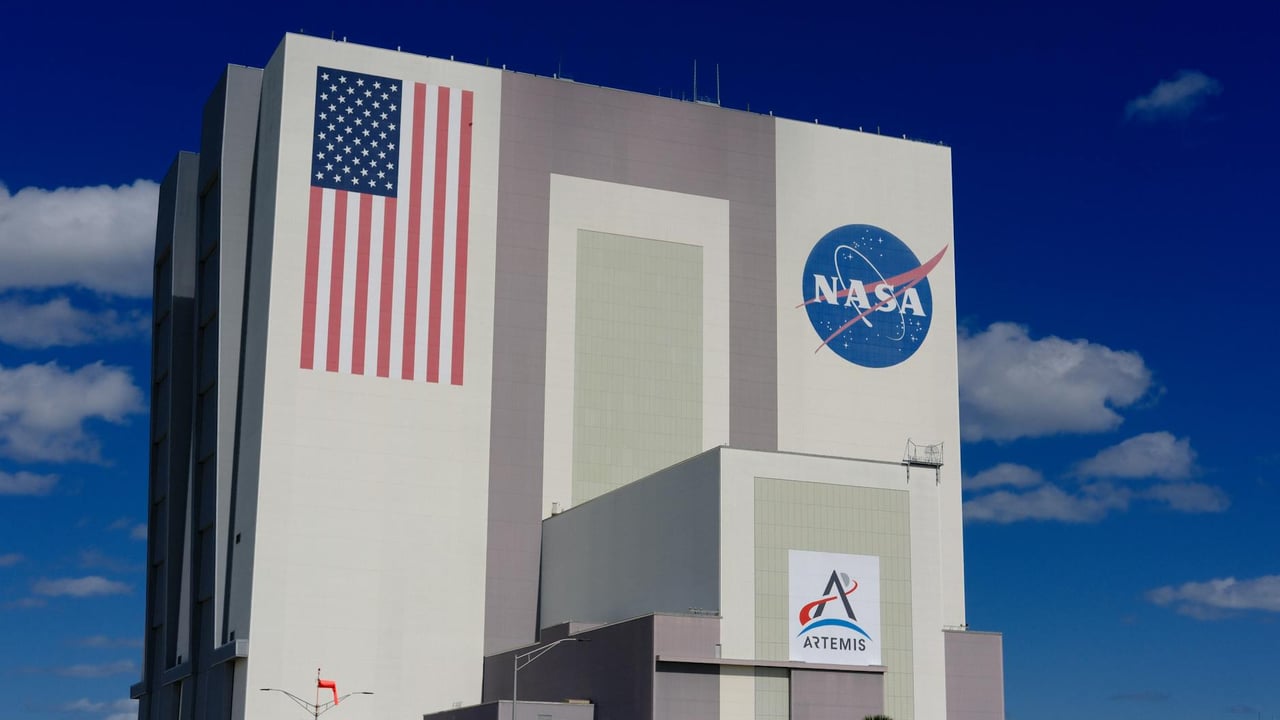

Chinese state news agency Xinhua reported that on 17 January NASA moved the rocket and crewed spacecraft for the Artemis II mission onto the launch pad at Kennedy Space Center in Florida. The operation — the visible culmination of months of assembly and testing — marks what NASA calls a critical preparation phase ahead of a crewed lunar flyby.
Artemis II will be the programme’s first crewed mission to fly around the Moon, flying an Orion spacecraft launched atop the Space Launch System. The movement of the integrated stack to the pad begins a period of final checks, integrated systems tests and rehearsals that precede formal launch campaigns, from propellant loading trials to ground and range safety verifications and astronaut ingress procedures.
A transfer to the pad is prosaic but meaningful: it demonstrates hardware readiness and coordination across the mission’s industrial, engineering and operations partners. It also exposes the programme to the familiar risks that have dogged large space projects — from last-minute technical anomalies to weather holds and political pressure over cost and schedule — risks that can reverberate through procurement timetables and congressional budgets.
Beyond engineering, Artemis II is a geopolitical and symbolic milestone. The move underlines the United States’ intent to revive human lunar exploration at scale after decades of absence, shaping alliances with agencies such as ESA and commercial players. Observers in Beijing and other capitals will read not only the technical progress but the programme’s domestic political resilience and international diplomacy around lunar governance and resource access.
For now, rolling the stack to the pad is a discrete step along a long road. The coming weeks will reveal whether the mission can pass its final integrated tests without major delay and whether NASA can convert this preparatory momentum into a timely, safe launch that advances the Artemis programme’s broader aim of sustained human activity around and on the Moon.