
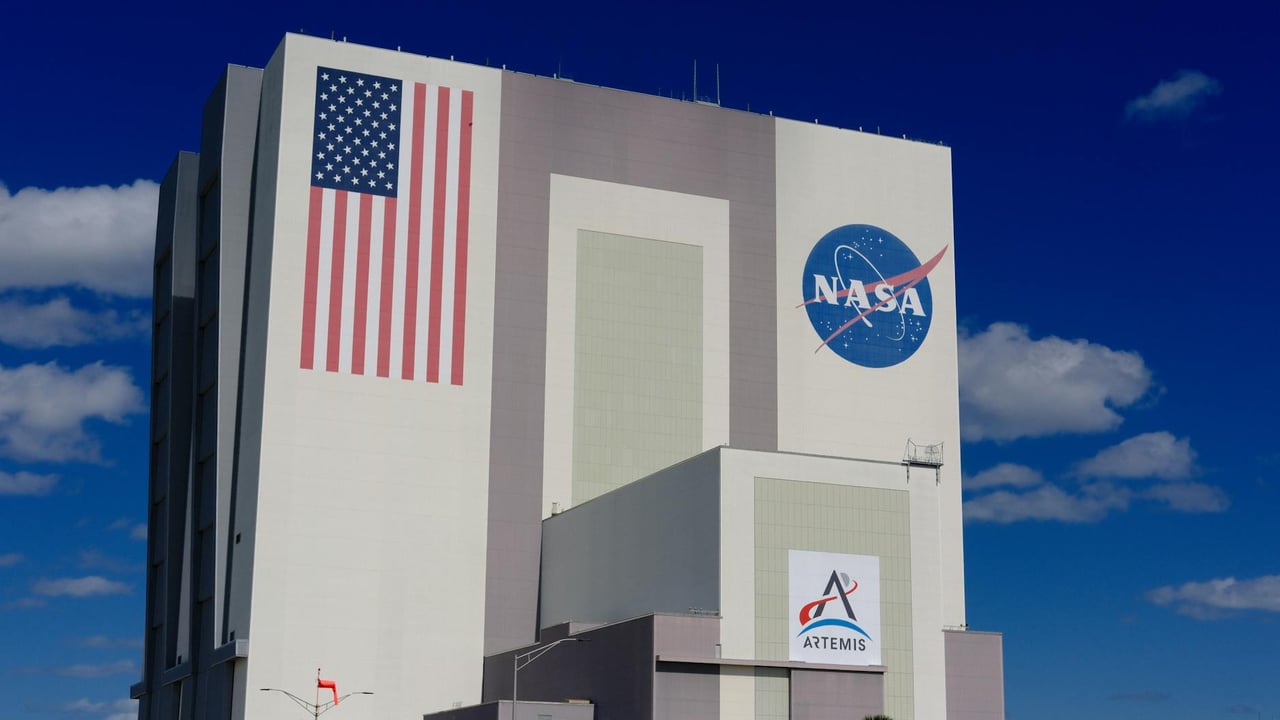

NASA has rolled the Space Launch System rocket and the Orion spacecraft for the Artemis II mission to the Kennedy Space Center launch pad, a visible milestone in preparations for the United States' next crewed venture to the Moon. The move on 17 January marks the campaign's transition from assembly to integrated testing and rehearsal, a stage NASA describes as critical for ensuring crew safety and mission readiness.
The Artemis II mission is slated to be a crewed lunar flyby that will carry four astronauts beyond low Earth orbit and return them to Earth, and NASA has said the mission will not take place earlier than 6 February. Both the Orion spacecraft and the Space Launch System will be making their first crewed flights on this mission, so engineers will use the coming weeks for extensive systems checks, countdown rehearsals and verification of abort and re-entry profiles.
Beyond the immediate technical tasks, Artemis II functions as an end-to-end test of the agency's deep-space human-flight capabilities. Success would validate life-support systems, communications at lunar distances, and the SLS–Orion integrated stack ahead of subsequent missions that aim to land astronauts on the lunar surface and establish longer-term operations.
The operation is also political theatre: placing crewed lunar hardware on the pad for the first time in more than half a century underscores Washington's intent to reassert leadership in human lunar exploration. The Artemis programme, which pairs NASA with commercial contractors and international partners, seeks both to demonstrate technical prowess and to revive a cadence of crewed missions beyond Earth orbit.
Risks remain. The programme has a history of delays, heavy costs and one-off complexities inherent in launching humans farther from Earth than the International Space Station. Any anomaly during pad tests or in-flight systems checks could push the schedule; conversely, a successful Artemis II would reduce uncertainties for follow-on missions and strengthen the case for sustained investment in lunar infrastructure.
In the weeks ahead attention will focus on integrated launch rehearsals, flight-readiness reviews and the health and training status of the four crew members. Whether Artemis II launches within the announced window, and how smoothly the integrated tests proceed, will shape both near-term human spaceflight prospects and the broader narrative about the United States' return to the Moon.