
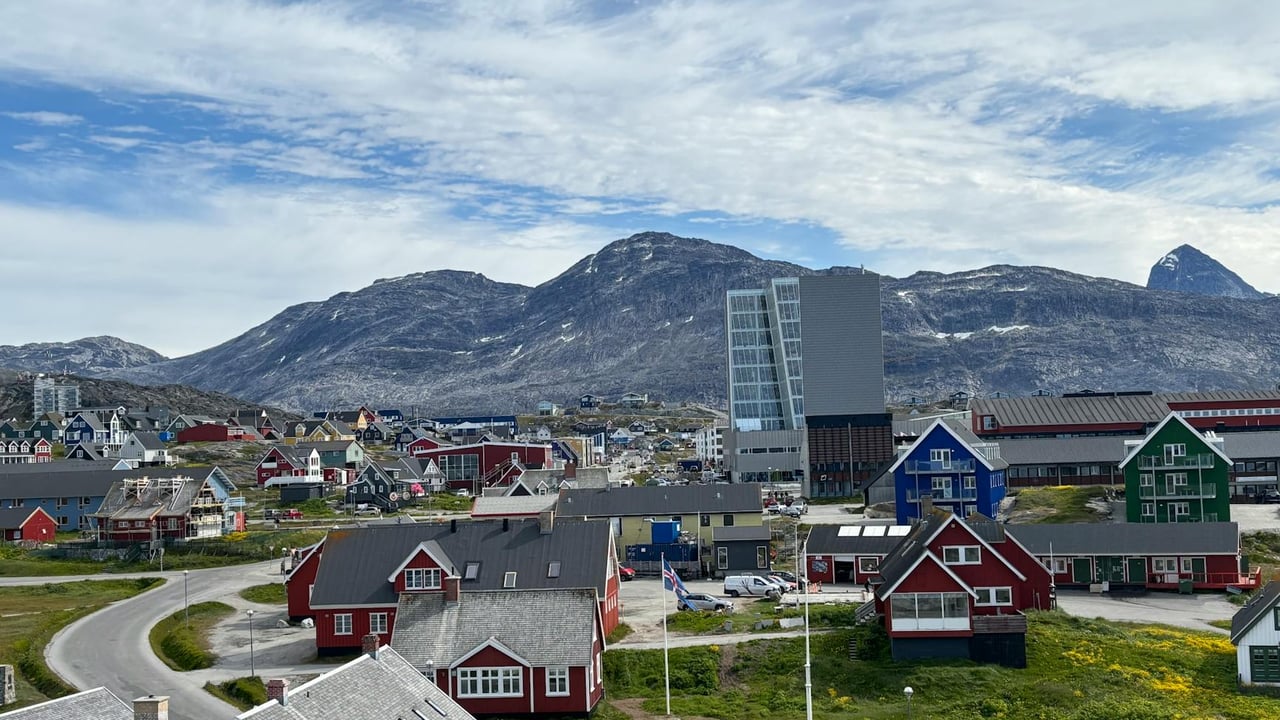

Greenlandic police approved the creation of a temporary military zone on January 17 in the Qinngorput suburb of Nuuk to store military equipment, local authorities said. The cordoned area, marked on satellite imagery and already holding containers and other materiel, will be fenced, signed and continuously patrolled; unauthorized access is prohibited for safety and security reasons.
The public notices did not name which armed force will use the site. Greenland has no independent military; Denmark is responsible for its defence, and allied activity — in particular Danish and NATO logistics or temporary US support — is the most likely explanation for the presence of military equipment in the capital region.
Nuuk lies on Greenland’s southwest coast and functions as the administrative and population centre of the autonomous territory. Placing storage and pre-positioned equipment there would ease access to Atlantic shipping lanes and regional infrastructure, enabling quicker movement of supplies, personnel or materiel during exercises, response operations or contingency scenarios.
The move follows years of rising strategic interest in the Arctic, driven by retreating sea ice, natural-resource opportunities and shorter trans-Arctic routes. Russia has increased its military footprint across the Arctic, and NATO members have stepped up exercises and infrastructure upgrades; temporary logistics hubs such as the one near Nuuk are consistent with that pattern of stepped-up preparedness.
Local authorities emphasized that safety, signage and environmental considerations were built into the plan, and police will maintain patrols and physical barriers. Still, military activity in and around population centres can be politically sensitive in Greenland, where debates over autonomy, resource development and the role of Danish and allied forces are ongoing.
Operationally the site may be a short-term storage and staging area for routine exercises or a prepositioning measure ahead of seasonal operations; strategically it is a small but tangible indicator that the Arctic’s civil and military infrastructure is being adapted to new geopolitical and environmental realities. Observers should watch for further announcements about which forces are involved and whether this becomes a recurring logistics node.