
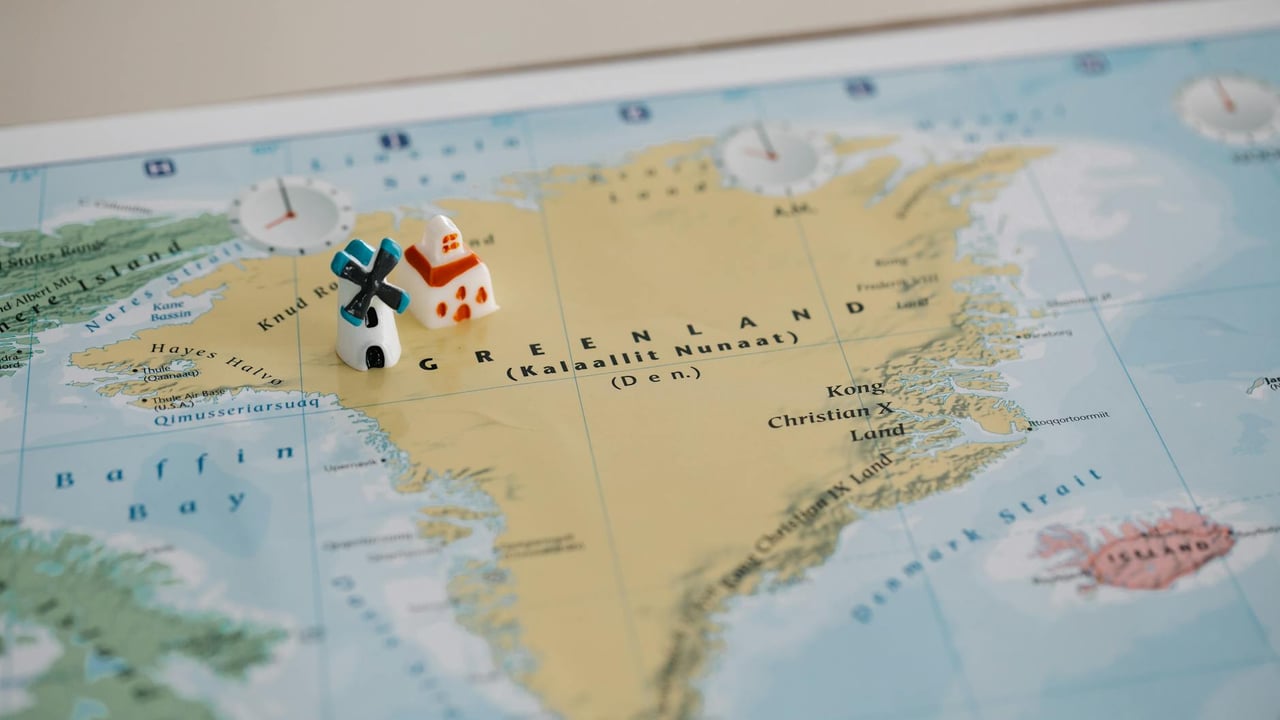

Denmark’s foreign minister sounded a stark warning in Oslo on 18 January, saying a spat between the United States and its European allies over Greenland has become “very contradictory” and that whether the transatlantic rift can be resolved will shape both the international order and NATO’s future. The dispute escalated after several European states deployed troops to Greenland for a Denmark-led exercise called "Arctic Endurance," and Washington responded by levying tariffs on those countries until they reach terms on a U.S. bid for Greenland.
Lars Rasmussen framed the troop deployments as a sober signal that Denmark and its European partners take Arctic security seriously. He said a January 14 meeting in Washington between Danish officials and U.S. Vice President Vance had been constructive and that Denmark hoped to dissuade the American president from pursuing a purchase of Greenland, but he described subsequent U.S. statements and the tariff decision as troubling.
Norway’s foreign minister, identified in the Danish account as Aide, echoed Rasmussen, calling Washington’s tariff move a “threat” and pledging that Oslo would not yield to pressure. The exercise, in which Norway, Sweden, France, Germany, Britain, the Netherlands and Finland dispatched forces to Danish-administered Greenland, was intended to underscore allied attention to Arctic defence, yet it now sits at the center of a broader diplomatic crisis.
The Kremlin and Beijing are not the central actors in this row, but they stand to benefit strategically from NATO distraction. Greenland’s strategic value — home to early-warning facilities, forward basing and potential mineral and energy resources exposed as the Arctic warms — has made the island a renewed object of great-power interest and a litmus test for alliance solidarity.
If tariffs are used as leverage over allied security activities, the immediate consequence is political: eroded trust between the U.S. and European capitals and increased pressure on smaller NATO members caught between American requests and domestic political expectations. Economically, European governments face the prospect of costly trade frictions that could dampen support for cooperation on defence in an era when deeper European engagement in Arctic security is already under discussion.
Longer term, the dispute raises fundamental questions about alliance governance and U.S. strategy. Using trade penalties to extract strategic concessions from allies converts partnership into transactional bargaining, incentivising European states to pursue greater strategic autonomy, to re-evaluate basing and interoperability arrangements, and to strengthen intra-European defence mechanisms independent of Washington.
Resolving the crisis will require rapid, high-level diplomacy that separates immediate commercial measures from security coordination and that restores predictable decision-making within NATO. The longer the dispute persists, the greater the risk that second-order effects — accelerated European defence consolidation, softer intelligence-sharing, and opportunistic moves by rival powers in the Arctic — will become entrenched.