
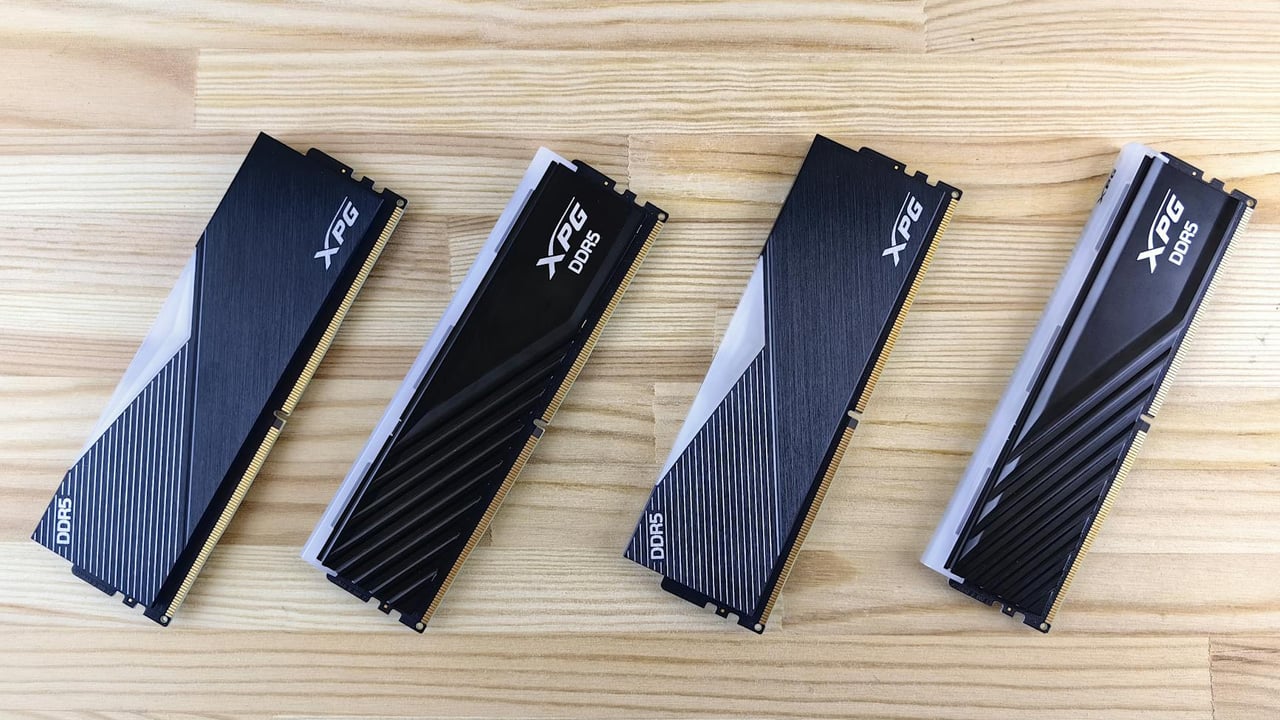

A sudden surge in artificial-intelligence workloads has pushed semiconductor memory from a technical commodity into a strategic bottleneck. Prices for server-grade DDR5 modules and enterprise SSDs have moved sharply higher as cloud giants and ASIC-heavy architectures gobble up capacity, transforming a corner of the chip industry into one of its hottest profit pools.
At its simplest, a storage chip is the memory of the digital world: an array of transistors and cells that can hold, retrieve and preserve data. Modern systems chain many kinds of memory — from tiny on-chip caches to dense NAND flash in data centres and consumer devices — but the core physical components remain chips fabricated on silicon. Because they store the bits that power applications, storage chips sit at the intersection of software demand and wafer-plant economics.
Storage memory enjoys several technical advantages that explain why it has become indispensable for AI. Purely electronic read/write operations eliminate the mechanical delays of spinning disks, enabling near-instant access for training and inference. Advances in nanometre process nodes and three-dimensional stacking have driven dramatic density gains, packing hundreds of billions of bits on fingernail‑sized dies. Chips also consume far less power than mechanical alternatives, tolerate shock and vibration, and employ on-chip error correction and wear-leveling to extend service life and reliability in demanding environments.
Those technical strengths have translated into a fast-changing market. Cloud providers such as Google and Meta are designing ASICs and server configurations that rely heavily on high‑capacity DDR5 RDIMM and large enterprise SSDs (eSSDs). Market forecasts now point to a persistent supply gap for server eSSDs and DDR5 RDIMM in early 2026, with analysts projecting DDR5 RDIMM price rises of 40% or more and eSSD increases in the 20–30% range. Embedded NAND and DRAM contract prices spiked in late 2025 — some segments rose 30–45% — and momentum looks set to continue into the first quarter of 2026.
Supply-side adjustment will be gradual. NAND and DRAM factories have long lead times and heavy capital needs, so capacity additions cannot quickly erase shortages. Global incumbents — Samsung, SK hynix and Micron — are increasing utilisation of existing lines, while Chinese firms are accelerating expansion and technology upgrades. Major domestic plans include a third Yangtze Memory fab in Wuhan targeted for 2027 with a planned monthly wafer output of 150,000 and a push to raise equipment localisation to around 50%. ChangXin Memory has begun high-end DRAM volume production with LPDDR5X products on 16nm lines, signalling Beijing-backed efforts to reduce import dependence.
The squeeze has immediate winners and losers. Memory manufacturers and related equipment suppliers stand to gain margin expansion and investor interest; passive products and consumers face higher bills for PCs, phones and data-centre services. Chinese capital markets have already priced the narrative — a chip-focused ETF (E Fund Chip ETF, ticker 516350) that tracks a basket of 50 domestic chip-industry firms presents one route for investors to express a bullish view on the sector, but fund disclosure and headlines emphasise that past performance is no guarantee and that volatility and policy risk remain material.
Beyond prices and profits lie strategic and geopolitical stakes. Memory is increasingly vital for national competitiveness in AI and cloud infrastructure. The combination of constrained global equipment supply chains, export controls and long ramp times for fabs means policy decisions and industrial strategy will shape where capacity ends up and which firms capture the profit pool. For companies and policymakers, the near-term task is to balance rapid capacity expansion with technological depth; for buyers, it is to plan systems and costs around a market that may stay tight well into 2026.