
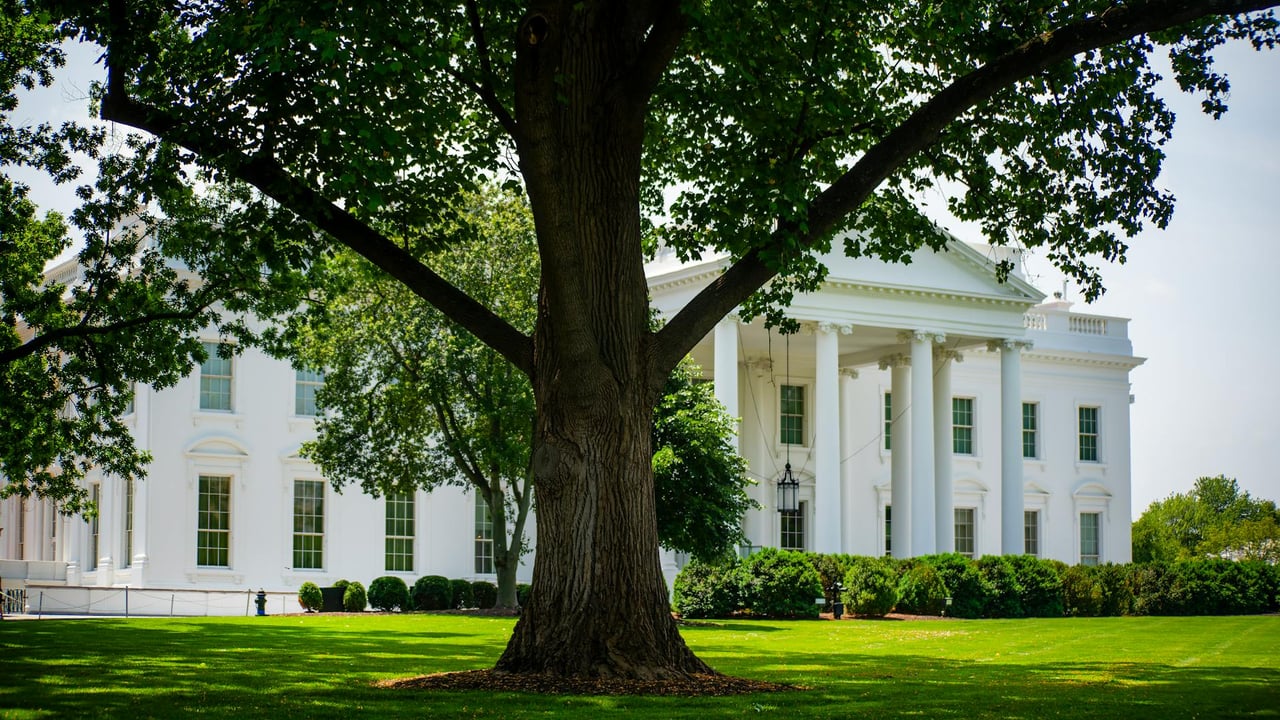

The White House’s newly announced “Peace Commission,” presented as a body to oversee a post-conflict transition in Gaza, has drawn alarm because its leaked charter suggests a far broader remit and an institutional design centered on American control. What began as part of a 20-point plan for Gaza now reads like an effort to create a more pliable, donor-driven mechanism for mediating international conflicts — one that critics warn could undercut the United Nations’ authority.
The draft constitution, published by an Israeli newspaper and circulated with invitations to a range of governments, does not confine the commission to Gaza; rather it argues that “sustainable peace” requires “practical judgement, common-sense solutions and the courage to abandon methods and institutions that have failed too often.” The proposal would make Donald Trump the inaugural chair with broad executive powers, grant member states one vote each, and require the chair’s approval for all decisions even when they pass by simple majority.
The commission’s steering committee, the White House says, will include senior American figures — Secretary of State Marco Rubio and presidential adviser Jared Kushner among them — alongside former British prime minister Tony Blair, World Bank president Ajay Banga, a U.S. national security deputy and a private financier. Invitations and the draft have been sent to countries including Argentina, Canada, Egypt, France, India, Italy, Jordan, Saudi Arabia, Turkey and Hungary, prompting cautious and mixed responses.
Several governments signalled unease. Canada’s prime minister said he “in principle” found the idea appealing after a conversation with Trump, but expressed reservations about how the body would operate. Egypt and Turkey had not publicly committed, while Saudi Arabia said it was reviewing the proposal internally. European officials discussed a collective response and were reportedly unwilling to countenance the existing draft but reluctant to provoke a public rift with Washington.
Legal and political questions hang over the project. The draft offers permanent status to any member that contributes more than $1 billion in the commission’s first year and exempts them from three-year term limits, and it allows the commission to be established once only three countries ratify the charter. Observers note that the United Nations Security Council in November had already authorised a role in supervising Gaza’s transition through to 2027, leaving unclear how — or under what legal authority — a U.S.-led body would operate outside the Middle East.
Experts who study mediation and institutional design were scathing. A former U.S. diplomat said the commission’s concept belonged to “a distant galaxy” rather than earthly realities, arguing it would be a poor substitute for on-the-ground diplomacy and unlikely to resolve complex conflicts from Sudan to Ukraine. Palestinian scholars and activists also highlighted a glaring absence in the draft: no explicit mention of Palestinians, their rights or statehood, prompting accusations that the initiative prioritises the political preferences of its Western and Gulf interlocutors over those most affected.
The initiative reflects a longer-standing U.S. frustration with multilateral institutions perceived as slow, politicised or insufficiently responsive to Washington’s priorities. Yet by centring one individual — and by building mechanisms that confer outsized influence to large donors — the commission could deepen fractures in the global peace architecture, provoke parallel institutions, and make consensus-based solutions harder to achieve. For countries invited to join, the choice is not merely technical: it is a strategic calculation about whether to support a potentially influential but U.S.-dominated instrument or to defend the existing UN-centred order.