
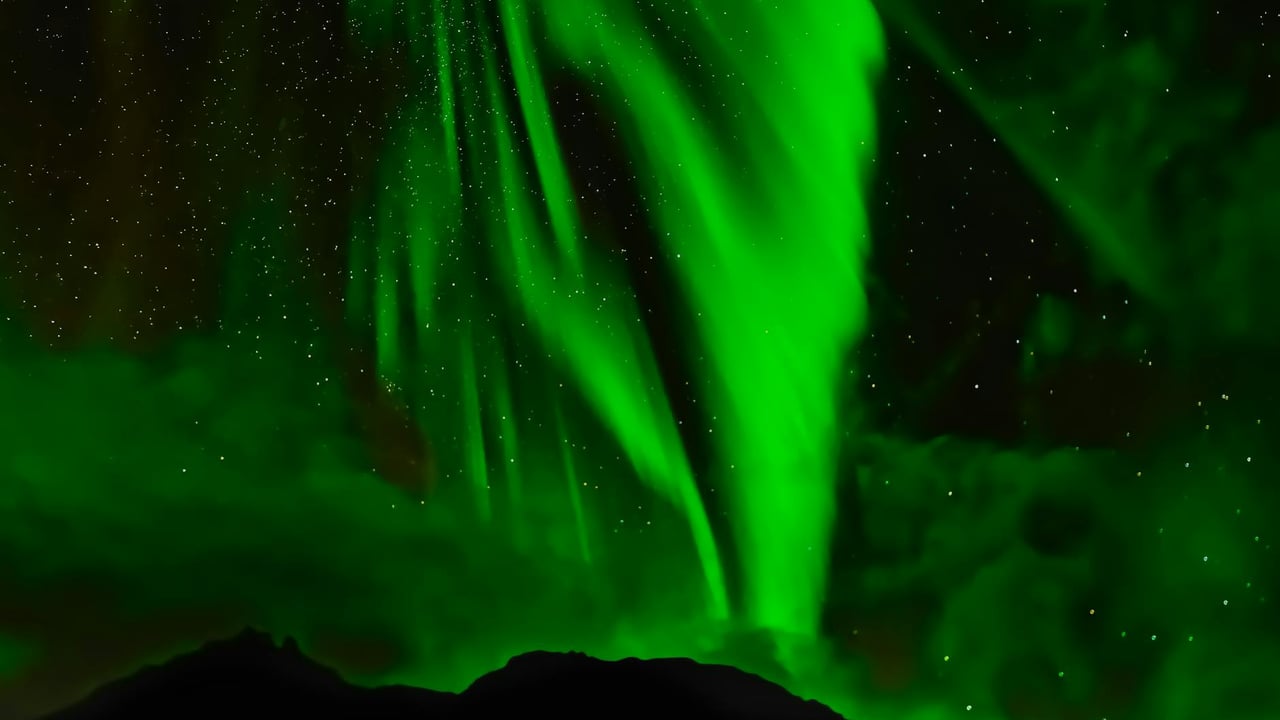

A powerful geomagnetic storm swept across Earth overnight, producing vivid auroral displays that were photographed far farther south than usual and rekindled public interest in space weather across China.
Observers in northern and central provinces posted images on social media of green, red and purple curtains of light painting the night sky. The phenomenon was the visible consequence of a coronal mass ejection from the Sun striking Earth's magnetosphere and energising charged particles that cascade into the upper atmosphere.
Beyond the visual spectacle, geomagnetic storms can disrupt technology society depends on. Extended or intense storms drive fluctuations in the near-Earth electromagnetic environment that can degrade high-frequency radio, interfere with satellite electronics and communications, increase error rates in GPS and other navigation services, and — in extreme cases — induce currents that stress power grids.
Space-weather scientists have flagged an uptick in solar activity in recent years as the Sun moved through a more active phase of its cycle; large coronal mass ejections remain an intermittent but well-documented hazard. Historical benchmarks such as the Carrington event of 1859 and the 1989 geomagnetic storm that knocked out Quebec's grid highlight how infrastructure can be vulnerable when preparedness is incomplete.
Chinese meteorological and space-monitoring bodies maintain continuous observation networks and issue advisories when disturbances are forecast. The recent storm underscored the importance of those systems and of international information-sharing: satellite operators and utilities rely on timely alerts to take mitigations, from putting spacecraft into safe mode to adjusting power-system load flow.
The spectacle in the skies is a reminder that space weather is not mere natural beauty; it is an operational risk. As society becomes more dependent on satellites, precision navigation and complex electricity grids, the cost of complacency rises. This event should prompt both public interest in the aurora and policy attention to hardening critical infrastructure and sustaining science and monitoring capacity.