
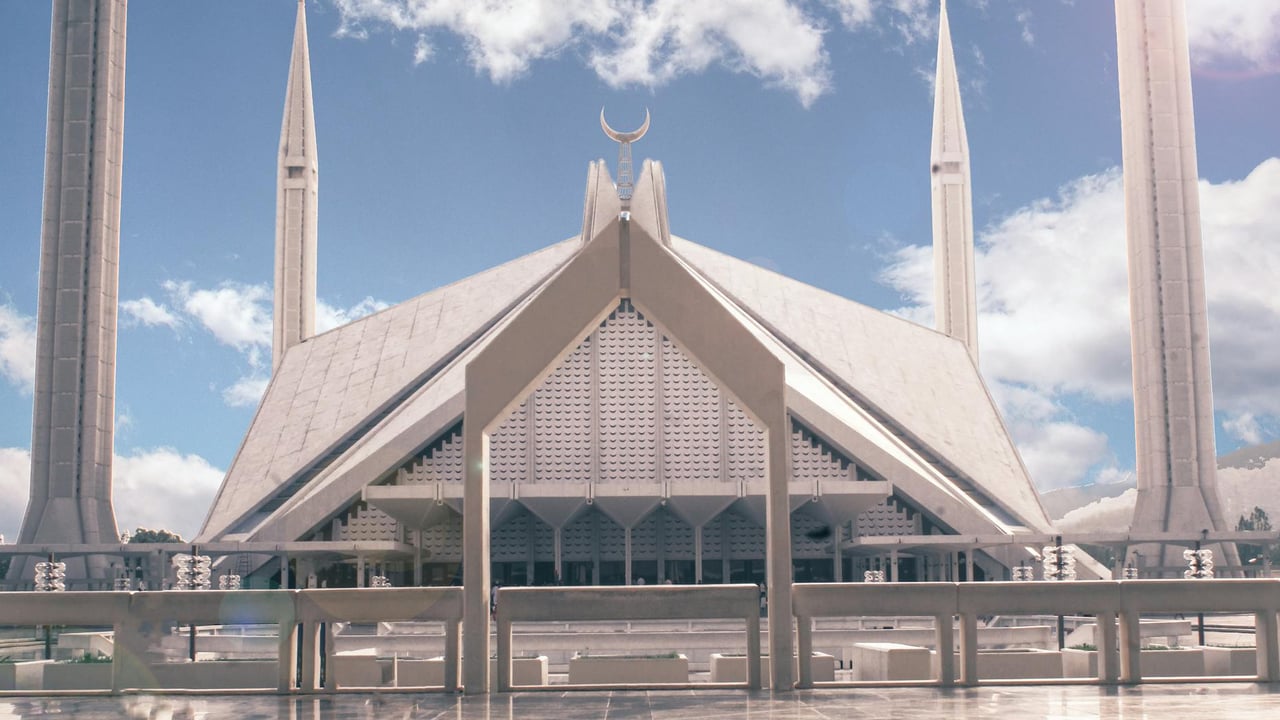

A suicide bombing at a mosque in Pakistan’s capital, Islamabad, on February 6 killed at least 31 people and wounded roughly 170, emergency services and hospitals said. The extremist group calling itself the Islamic State released a statement on its social channels claiming responsibility and said its attacker detonated an explosive vest after reaching the mosque’s inner gate, causing mass casualties.
Victims were rushed to hospitals in Islamabad and the neighbouring garrison city of Rawalpindi, where medics warned that the death toll could yet rise because several wounded remained in critical condition. Pakistani Prime Minister Shehbaz Sharif condemned the attack, expressed condolences to victims’ families and reiterated the state’s resolve to pursue the perpetrators, officials said.
The strike in Islamabad — a city long regarded as more secure than other parts of Pakistan — marks a striking escalation in geography and audacity. Mosques have repeatedly been targeted by militant groups in Pakistan’s recent history, but an attack in the capital highlights both persistent operational capabilities among militants and continuing gaps in protective measures for places of worship and high-density public sites.
Islamic State’s claim, posted on its communication channels, follows a pattern in which the group seeks to bolster its influence and relevance by taking credit for attacks beyond its traditional strongholds. In South Asia, affiliates such as Islamic State Khorasan Province (ISKP) have previously carried out strikes in Afghanistan and Pakistan, exploiting porous borders, local militant networks and sectarian fault lines.
For Pakistan the attack complicates an already fraught security and political landscape. The government will face immediate pressure to demonstrate effective intelligence-sharing, tighten urban security, and reassure a public weary of periodic mass-casualty incidents. It may also prompt renewed cooperation requests to regional and global partners on counterterrorism, surveillance of extremist online channels, and border controls.
Beyond Pakistan’s borders, the blast underlines enduring regional risks from transnational jihadist networks that can strike capital cities and civilian religious sites, amplifying tensions and prompting hardline security responses. The claim of responsibility will be used by the group to recruit, fundraise and amplify fear; for policymakers the priority will be to deny militants that political and propaganda victory while preventing a cycle of retaliation and communal polarisation.
Investigations are expected to focus on how the attacker entered the mosque, whether accomplices or local facilitators were involved, and the extent of any links to foreign networks. Authorities will also be scrutinised for their capacity to protect sensitive sites inside the capital and to disrupt militant communication channels that coordinate and publicly celebrate such violence.
As the death toll and details continue to be clarified, the immediate human cost is clear: dozens of families have been ripped apart and a community shaken. The wider consequence is a reminder that despite shifts in militant geographies, Islamist extremist groups remain capable of striking symbolically and lethally inside national capitals, with implications for domestic stability and regional security cooperation.