
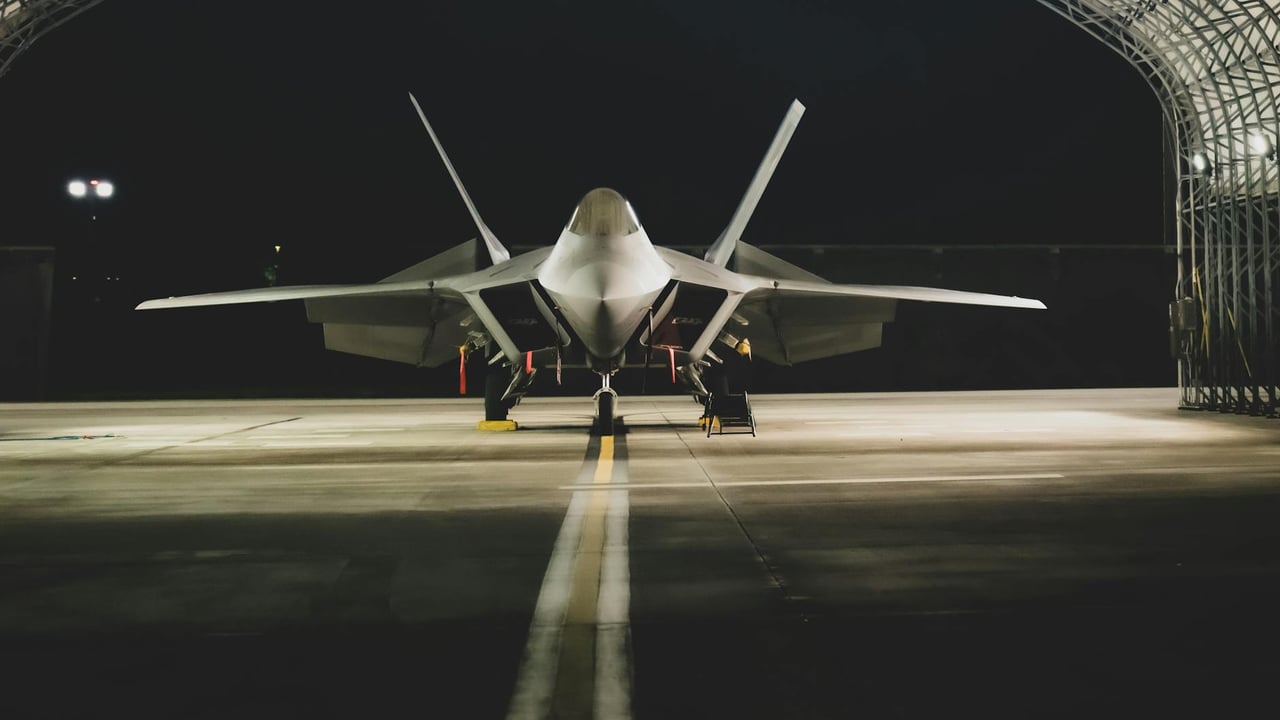

The US Air Force withdrew two F-22 Raptor stealth fighters that had been scheduled to participate in the Super Bowl aerial demonstration, citing emerging operational requirements. The decision, announced by the service on February 6, came as the Air Force reallocated the fifth‑generation jets to other missions deemed higher priority than a public display.
Katie Spencer, who coordinates the Air Force’s sports outreach and was overseeing the flyover planning, said the F-22s were part of the original plan but were redeployed when the military’s operational tempo increased. She declined to provide details about the new tasks, though recent reporting and Pentagon activity point to intensified operations in the Middle East, including the F-22’s involvement in an operation dubbed “Midnight Hammer” targeting Iran last June.
The pullout is the latest sign of elevated US military attention on Tehran. Washington has been pressing Iran through a mix of naval deployments, sanctions and indirect diplomacy, while both sides have signaled a willingness to continue talks even as they maintain aggressive postures. The presence of carrier strike groups and other assets in the region has been accompanied by stepped-up Iranian deterrence measures.
Removing F-22s from a high‑profile public event highlights two intersecting dynamics: the finite availability of advanced military platforms and the Pentagon’s preference to prioritize classified or time‑sensitive operations over public-relations opportunities. Fifth‑generation fighters are scarce, costly to operate, and subject to intensive maintenance and security constraints that make them less fungible than legacy aircraft.
For the Pentagon the decision carries both practical and symbolic weight. On the practical side it underscores the demand for stealth assets in contingency operations and the strain on US force posture when multiple theaters require rapid response. Symbolically, it signals to allies and adversaries alike that the US is placing operational priorities ahead of spectacle—an implicit message that resources are committed to real‑world contingencies rather than ceremonial displays.
The wider implication for US‑Iran tensions is mixed. Redeploying stealth platforms can be read as a calibration of deterrence: it reassures partners and signals to Iran that the US is prepared to act, while the absence of public explanation leaves room for ambiguity that both constrains and complicates diplomatic channels. For domestic audiences, the episode is a minor hit to the Pentagon’s recruitment and outreach efforts, but for policymakers it is a visible indicator of how ongoing geopolitical frictions translate into operational decisions.