
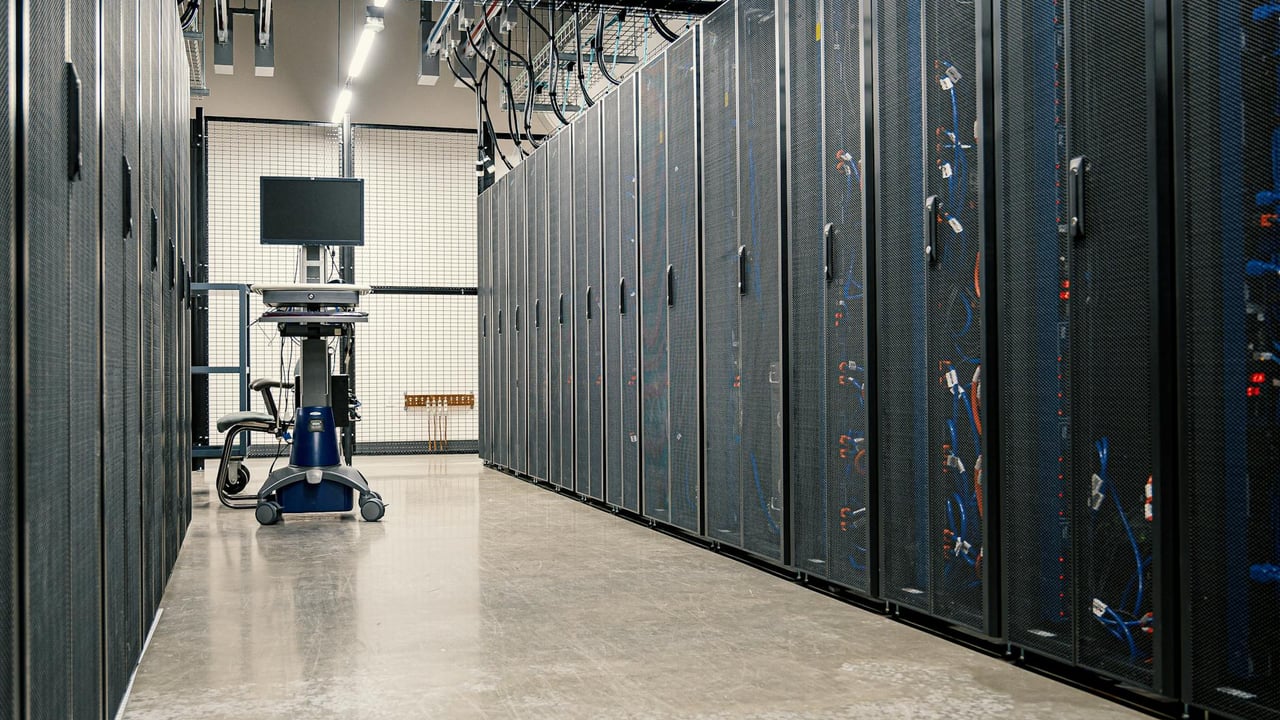

Tech companies’ frenzied spending on artificial‑intelligence infrastructure is colliding with the physical limits of power supply. Alphabet’s recent decision to raise as much as $20 billion in dollar bonds and to set capital expenditure at about $185 billion this year is emblematic: hyperscalers are racing to add data centres and custom AI hardware, and that means far more high‑power, high‑reliability electricity at every site.
The immediate consequence is rising demand for heavy electrical equipment — transformers, high‑voltage cables and ancillary components — that feed AI compute clusters. Global high‑voltage gear is already tight, and the additional incremental demand from AI (often grouped under “AI data centre construction” or AIDC) widens the supply gap. Where compute racks are the brain of an AI system, robust power delivery has become its lifeline; transformers are increasingly described as core elements of “compute infrastructure.”
Chinese manufacturers are moving to exploit the opening. Domestic private leaders such as TBEA (特变电工) have integrated capabilities across high‑voltage cables, accessories and construction services, positioning them to offer turnkey solutions for both domestic and overseas projects. Smaller listed companies highlight rapid export growth: Huaming Equipment has reported steady year‑on‑year rises in power‑equipment export value over recent reporting periods, while Shenma Power draws on technical influence in global insulator standards bodies to boost competitive advantage.
The supply constraint has policy and market ramifications beyond industrial opportunity. In the United States some states and local jurisdictions are already debating restrictions on new data centres, citing concerns that large new loads could crowd out residential demand or stress grids. That tension underscores the broader geopolitical angle: countries and grid operators will increasingly have to weigh the national economic benefits of hosting AI facilities against reliability and regulatory pressures.
The story of AI’s material footprint runs beyond transformers. Critical input markets are tightening: indium — used in ITO targets for displays and optical modules — has seen prices surge to decade highs as Chinese producers lift offers and global demand broadens into semiconductors, new photovoltaic materials and automotive electronics. China supplies roughly 70% of global indium, and constrained upstream zinc/refining output has kept incremental indium supply sluggish.
AI’s diffusion is also reshaping adjacent sectors. Cybersecurity firms and vendors are rolling out “AI+security” products as corporate and national priorities shift toward trusted AI. Domestic vendors have advanced proprietary security AI agents and large security models tailored to vulnerability detection, log analysis and API defence; new regulations in China are sharpening compliance requirements for network‑security incident reporting and broadening the governance perimeter for AI systems.
Content and consumer markets are adapting too. Publishers and platforms such as China Literature (阅文集团) are embracing AI tools for story visualisation and short‑form ‘‘AI serials’’ production, while travel and automotive sectors are expecting a near‑term spike in consumption around the Lunar New Year. The cumulative picture is one of accelerated digitalisation reshaping supply chains, commodity markets and regulatory frameworks all at once.
For international readers the takeaway is clear: AI’s most visible innovations — models and applications — rest on a heavy, conventional industrial base. The current crunch in high‑voltage equipment and strategic materials like indium shows how a software‑first wave can reverberate through metals markets, factory supply chains and power systems. That makes corporate winners likely to be those that combine technology credentials with manufacturing scale and supply‑chain reach.