
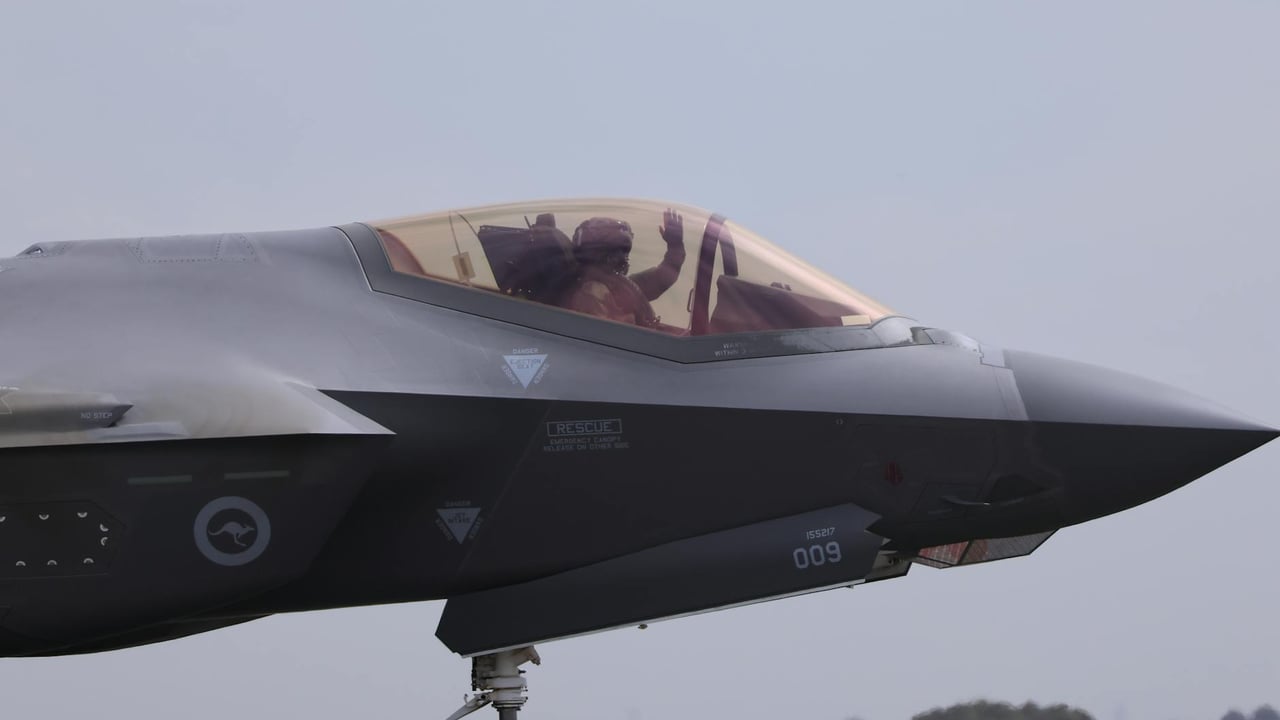

U.S. media and congressional sources in early February reported a striking logistics glitch: a tranche of newly delivered F‑35A fighters reached the Air Force without their nose radars installed, a delay attributed to production and integration problems with a newer radar variant. The affected jets retain stealth shaping and avionics but, deprived of their primary fire‑control sensor, are limited to visual engagements and short‑range missiles until the radar backlog is resolved or retrofit work is completed.
Operationally, a tactical fighter that cannot see beyond visual range is a very different weapon. Without an installed active electronically scanned array (AESA) tied into the F‑35’s sensor‑fusion suite, pilots lose the platform’s principal advantage in beyond‑visual‑range detection, targeting and networked engagement. The service can still fly these aircraft for training, ferrying and some mission sets, but their combat value in contested airspace is sharply degraded until radars are fitted.
Washington’s acquisition and industrial base problems are on display. The issue, as reported, stems from delays in a next‑generation radar intended for new production lots; older radar types are reportedly incompatible with the latest aircraft wiring and nose‑cone arrangements. The Air Force and Lockheed Martin face a choice that has become familiar in recent years: accept incomplete aircraft and retrofit later, slow deliveries to match component availability, or press forward with interim solutions such as radar‑equipped escorts, podded sensors or operational workarounds.
The delivery hiccup has immediate alliance and credibility implications. The United States exports the F‑35 widely; allies expecting out‑of‑the‑box fifth‑generation capabilities may receive jets that require follow‑on work to achieve full combat functionality. Politically, pressing forward with partial deliveries can be defended as keeping production lines open and meeting delivery schedules, but it risks embarrassing partners and complicating training and interoperability timelines.
Amplifying the story, some outlets juxtaposed the radar delay with a dramatic claim about Chinese production: that China is building up to 1,000 J‑20 stealth fighters and is already producing as many as 120 airframes a year. If true, such a scale would represent an unprecedented surge in modern combat aircraft and would reshape calculations about regional air power, numbers versus quality, and the logistics of high‑intensity air campaigns.
The 1,000‑aircraft figure should be treated with caution. China has indeed accelerated J‑20 production and modernised its industrial base, but reaching a fleet of that size would require sustained high‑rate manufacturing, pilot and maintainer throughput, basing investments and longterm sustainment that leave traces in open‑source data and procurement budgets. Still, even a smaller but sustained ramp‑up in J‑20 deliveries would matter: massed stealth fighters complicate targeting plans, strain regional air‑defence architectures and force adversaries to prioritise attrition‑resilient concepts and sensor networks.
Strategically, the episode exposes two related vulnerabilities: America’s dependence on tightly choreographed supply chains for complex systems, and the growing scale of China’s aerospace industrial effort. The former can be mitigated by supply‑chain investments, alternative sensor fits and operational innovation; the latter will pressure U.S. planners to accelerate force design changes that balance capability, survivability and numbers, including unmanned systems, attrition assumptions and distributed basing.
What to watch next: whether the factory backlog is cleared on the timetable promised by the Pentagon, whether interim sensor solutions appear in fleet operations, and whether independent open‑source intelligence confirms sustained J‑20 production at scale. For allies and Indo‑Pacific planners, the immediate questions are how many F‑35s will be combat‑ready on arrival, how that affects deterrence calculations in the near term, and how quickly rival air fleets can plug capability gaps with numbers or alternative sensors.