
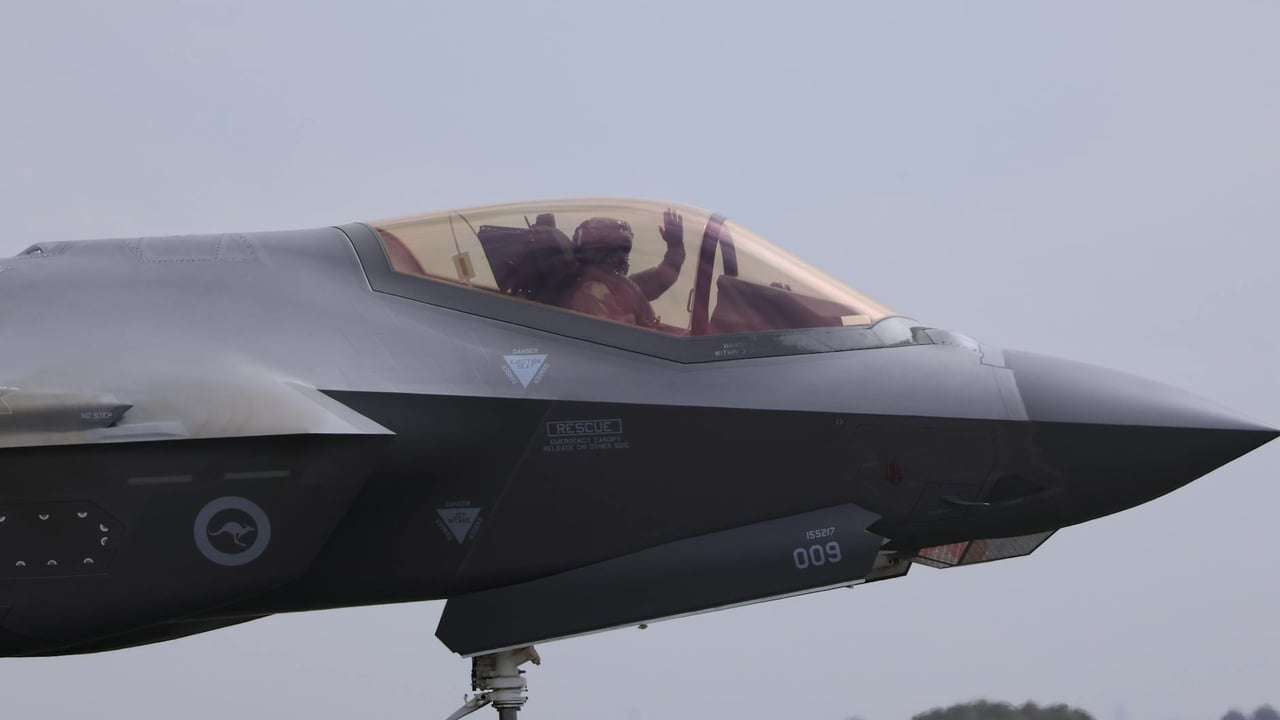

Avionics International reported that Lockheed Martin deliveries of the 17th production batch of F-35 fighter jets to the U.S. Air Force, beginning in June 2025, were shipped without the newest AN/APG-85 active electronically scanned array (AESA) radar installed. The airframes carried only the radar pedestal; because the AN/APG-81 and AN/APG-85 have distinct installation interfaces, the jets cannot simply be fitted with the older APG-81 either. The result, according to the report, is a tranche of front-line aircraft that lack an operational nose radar at handover.
The absence of a functional radar is more than a technical footnote: radar is central to the F-35’s primary missions. The AN/APG-85 is intended to furnish advanced air-to-air search and track, air-to-ground mapping, and synthetic aperture radar modes that underpin weapons employment and threat identification. While the F-35’s suite of sensors — including the Distributed Aperture System, electronic support measures, and secure datalinks — provides complementary situational awareness, none fully substitute for an integrated AESA radar when it comes to target detection, engagement ranges, and precision strike capability.
Delivering aircraft without installed radars points to pressure in the production and supply chain for one of the Pentagon’s highest-priority programs. Manufacturers and the Defense Department face intense incentives to meet contractual delivery schedules and unit-cost targets; installing only a pedestal may be a stop-gap to avoid missed milestones. That stop-gap, however, shifts costs and logistics burdens to the fleet: jets will need retrofits, extra test cycles and additional logistics support, creating operational gaps and potential schedule slippage for deployments and training.
The episode amplifies broader risks for the U.S. defense-industrial base. A mismatch between airframe assembly and sensor availability reflects upstream bottlenecks — whether component shortages, production-line changes for the AN/APG-85, certification delays or integration challenges. It also hands ammunition to congressional critics who have already pressed contractors and the Pentagon over cost overruns, late deliveries and the complexity of fifth‑generation programs.
Operationally, the impact could be acute in high-tempo theaters. The F-35 fleet forms the backbone of U.S. and allied air superiority and strike plans, especially in the Indo-Pacific where deterrence demands a ready, distributed force. Aircraft that require post-delivery radar installation reduce the number of mission-capable jets available for exercises, rotations and surge operations, complicating force posture and alliance planning. Allies awaiting F-35 deliveries will also watch closely for how the U.S. addresses retrofits and capability shortfalls.
The Pentagon and Lockheed Martin have several courses of action: accelerate deliveries of AN/APG-85 units and field retrofits, rework installation compatibility, or adjust production and acceptance criteria. Each carries trade-offs in money, time and risk. Whatever path is chosen, the incident underscores the fragility of linking complex subsystems across a sprawling supply chain and the operational consequences when those links fail.
For a program long criticized for its complexity and cost, the report will likely prompt fresh scrutiny. Whether treated as a temporary production glitch or a symptom of deeper integration problems will determine both the F-35 program’s short-term readiness and longer-term confidence among U.S. defense planners and partner nations.