
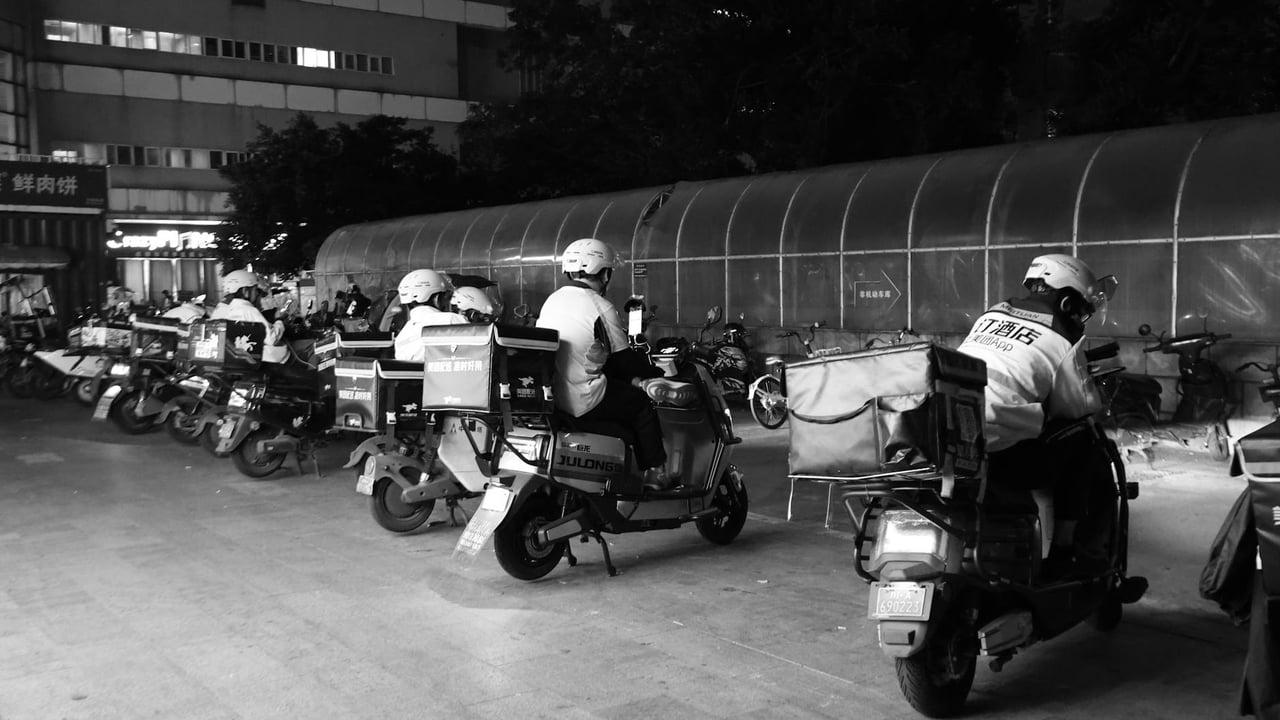

Local market regulators across China have issued a wave of pre–Spring Festival directives telling major food-delivery platforms to stop the low-price, subsidy-fuelled “involution” that has defined recent competition. Authorities in cities including Xinyang and Nanyang (Henan), Bengbu (Anhui), Shantou (Guangdong), Wenchang (Hainan) and Liaoyang (Liaoning) demanded that platforms cease organising deep-discount campaigns, predatory subsidies and other practices that distort market order and squeeze small merchants.
The notices single out behaviours that have become familiar in the platform economy: sustained subsidy injections, using low-price dumping as a core strategy, and “拼补贴、拼价格、控流量” — competing on subsidies and price while aggressively controlling traffic. Regulators warned that those tactics not only run counter to Beijing’s stated aim of “normative, healthy and sustainable” platform development, but also erode the bargaining power and margins of independent restaurants and delivery partners.
Enforcers also emphasised anti-competitive technical and contractual tools. Market authorities warned against “二选一” (forcing merchants to choose one platform), data monopolies and “big-data price discrimination,” as well as technological measures that suppress rivals or coerce merchants into promotions by lowering search rankings or setting unreasonable thresholds. The directives explicitly prohibit platforms from using service agreements, trading rules or opaque algorithms to unduly constrain merchants’ pricing decisions.
Industry bodies have chimed in. Provincial and local catering associations, such as the Gansu Culinary Association, urged the sector to halt low-quality, low-price competition and urged a shift from contesting on financial stamina to competing on service and product quality. The associations argue that subsidy wars turn market competition into a test of capital tolerance, weakening small merchants’ pricing autonomy and squeezing the offline catering economy.
The timing matters. The Spring Festival is the busiest period for take‑out in China, when millions of urban workers return home and delivery volumes spike. Regulators’ calls for stability therefore reflect both market-health concerns and wider social-stability priorities; a chaotic, margin-crushing discount war could quickly ripple into closures, worker income shocks and local political headaches during a sensitive season.
This intervention fits into a broader regulatory arc. Since the 2020–21 clampdown on big tech’s excesses, Beijing has steadily reined in platforms’ predatory competitive tactics through antitrust investigations, new data and competition guidelines, and exhortations to prioritise “value creation” over “capital consumption.” Local campaigns to police holiday promotions show the centre and municipal regulators are converting high-level guidance into operational constraints on business models built around limitless subsidies and hyper‑aggressive user acquisition.
For platforms, the directives pose practical choices. They can comply and pivot toward product, logistics and service improvements, accept narrower short‑term growth in exchange for steadier long‑term margins, or seek novel promotion mechanics that stay inside the letter of rules while preserving user growth. For small restaurants and delivery couriers, the immediate relief might be less downward pressure on prices and the restoration of bargaining space — but much will depend on enforcement rigor and whether larger platforms adjust commission rates and algorithmic priority rules.
If effectively enforced, the measures could accelerate consolidation of a healthier on‑demand food market; if half-implemented, they may simply push platforms to invent more subtle forms of competitive pressure. Either way, the move signals that local regulators will not be passive observers of platform competition tactics during peak seasons — and that the platform economy’s model of growth by subsidy no longer enjoys implicit tolerance from Chinese authorities.