
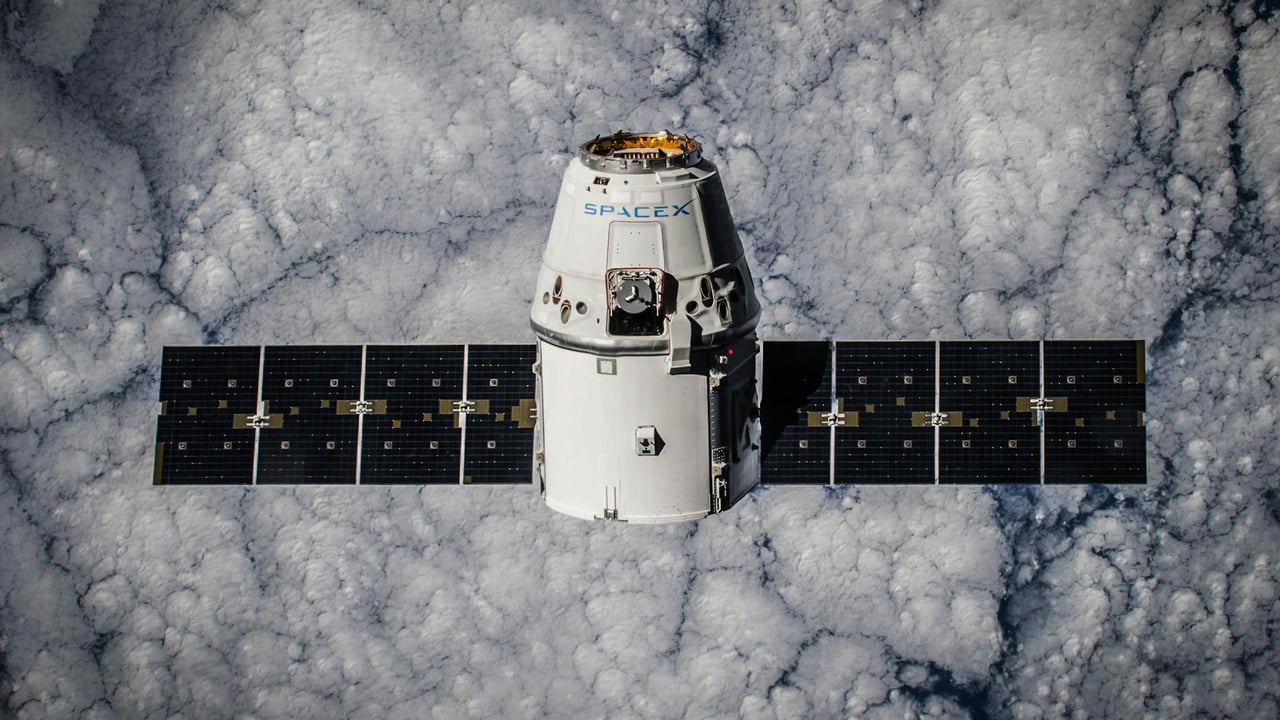

A SpaceX Dragon spacecraft lifted off from Cape Canaveral on February 13, ferrying a four‑person international crew to the International Space Station (ISS). The vehicle mounted a Falcon 9 at 05:15 Eastern Time (18:15 Beijing time) and separated from its booster as planned, beginning a roughly day‑long chase to rendezvous and dock with the orbital outpost on February 14.
The mission, designated Crew-12 in China’s coverage, will keep the astronauts aboard the station for about eight months. The manifest mixes nationalities and agencies: NASA astronauts Jessica Meir and Jack Hathaway, European Space Agency astronaut Sophie Adenot, and Roscosmos cosmonaut Andrei Fedyayev. Their programme emphasises laboratory work to support long‑duration human exploration, including experiments on plant growth and interactions with nitrogen‑fixing bacteria to improve food production in space.
Technically, the flight underlines the maturity of the United States’ commercial crew architecture. SpaceX’s crewed Dragon is now a routine transporter for rotation flights, delivering personnel with a cadence and cost profile that national agencies can schedule around. The mission points to a logistics model in which private providers handle crew transport while national partners focus on science, hardware and long‑term planning.
Politically, the flight is a reminder that the ISS remains one of the few arenas of sustained multinational cooperation in space. With American, European and Russian crew members aboard, day‑to‑day operations and experiments continue despite broader diplomatic frictions on Earth. China, by contrast, remains outside the ISS partnership and is pursuing an independent path with its Tiangong station and expanding lunar ambitions.
Scientifically, the work planned by the Crew-12 complement research aimed at Artemis‑era and Mars missions. Improving plant cultivation and closed‑loop life‑support processes is central to reducing resupply needs on distant missions and enabling longer stays on the Moon or Mars. The data produced during this eight‑month increment will feed models of food security, radiation exposure and human performance in microgravity.
Looking ahead, the flight illustrates two converging trends: the growing reliance on commercial launch and crew services, and the persistence of international collaboration aboard legacy platforms. As the ISS approaches the end of its operating life later this decade, partners will need to decide how to transition scientific activity—whether into commercial free‑flyers, national stations, or bilateral arrangements that maintain the unique, cooperative laboratory that the ISS has become.