
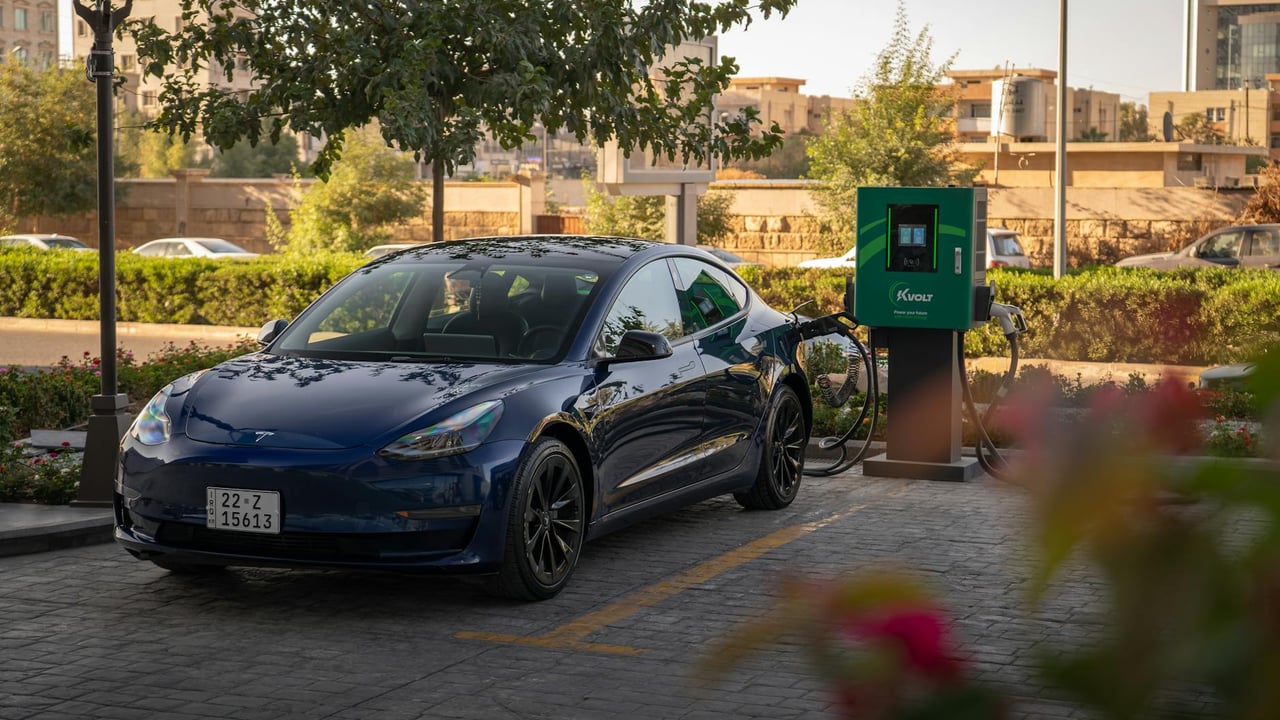

China has moved to curtail a striking design trend in electric vehicles, issuing a mandatory safety standard (GB 48001—2026) that effectively ends fully hidden, power‑dependent exterior door handles. The new rule requires every door to have a mechanically operable exterior and interior handle and for external handles to leave a reserved mechanical operation space; implementation is phased, with new model approvals from 1 January 2027 facing most requirements, full compliance for new models by 1 January 2028, and existing approved models required to retrofit by 1 January 2029.
Hidden door handles are hardly new — they appeared on Italian sports cars in the 1970s and cropped up on niche models through the 1990s and 2000s — but Tesla’s 2012 Model S popularised the electrically actuated, pop‑out handle as a symbol of futuristic design. In China the style went mainstream: around 60% of the top 100 selling new‑energy vehicles in April 2025 used hidden handles, making the feature a visual shorthand for technology and modernity among domestic and foreign brands.
That aesthetic success has collided with a string of alarming rescue scenarios and rising consumer complaints. Cases in recent years — including a 2024 highway rear‑end involving a Wenjie M7, multiple 2025 collisions involving a Xiaomi SU7, and a March incident where a Dongfeng 007 rear door could not be opened from outside after a fire — exposed situations where power loss or mechanical failure impeded escape and rescue. The China Consumers Association reported surging complaints in 2024, with finger‑pinch injuries up 132% year on year and frequent reports of low‑temperature failures and post‑collision inability to open doors.
Technically, the vulnerabilities are straightforward. Fully hidden handles depend on motors, sensors and the vehicle’s electrical system; severe collisions can cut power, extreme cold can freeze mechanisms, and additional complexity raises failure and repair rates. Test engineers say laboratory wind‑tunnel and climate chambers cannot easily replicate every real‑world freezing or icing scenario, and executives such as Great Wall’s Wei Jianjun have openly criticised hidden handles for added weight, poorer sealing and reliance on electricity.
The economic cost of redesign will not be trivial. Bloomberg estimates redesign of door systems can exceed CN¥100 million (roughly US$14.4m) per model, a burden multiplied across product lines. Global and Chinese models that prominently used hidden handles — Tesla’s Model 3/Y, BMW’s iX3, NIO’s ES8, Li Auto’s L series, Xpeng’s P7 and several BYD models — must adapt designs, forcing automakers and suppliers into rapid technical and supply‑chain adjustments.
Some manufacturers are already responding. Geely’s Galaxy M9 has switched to traditional external handles, parts of BYD’s range are adopting exposed or semi‑hidden designs, and AITO’s M8 uses a semi‑hidden handle with an independent emergency power module. Tesla has said it will comply while exploring integrated electronic and mechanical solutions. The standard does not outlaw electronic elements outright; it mandates independent mechanical release and reserved hand‑operation space, leaving room for semi‑hidden or hybrid designs that combine aesthetics with mechanical redundancy.
The regulatory shift will reverberate beyond China. As the world’s largest electric vehicle market, China’s rules have outsized influence; international outlets and analysts have suggested the standard could become a template as Chinese cars and suppliers export or as other jurisdictions take up similar safety concerns. U.S. regulators have already investigated Tesla Model Y door‑handle defects, and suppliers able to blend mechanical and electronic expertise look likeliest to gain market share in a reconfigured supply chain.
But consumers and dealers in China do not appear uniformly aggrieved by the change. Retailers report few buyers explicitly ask about door‑handle styles; most prioritize range, space, charging and software features. That suggests the shift will be felt most keenly by designers, brand strategists and suppliers for whom hidden handles were a visual signal of premium tech rather than a consumer requirement.
The new standard marks a broader regulatory inflection point: China is shifting from a permissive stance that let rapid design experimentation flourish to one that codifies safety minimums even when they complicate aesthetics and branding. The immediate result will be an industry scramble to reengineer parts and supply chains, but the longer‑term effect may be a more cautious, standards‑driven design language that reconciles style with mechanical reliability.