
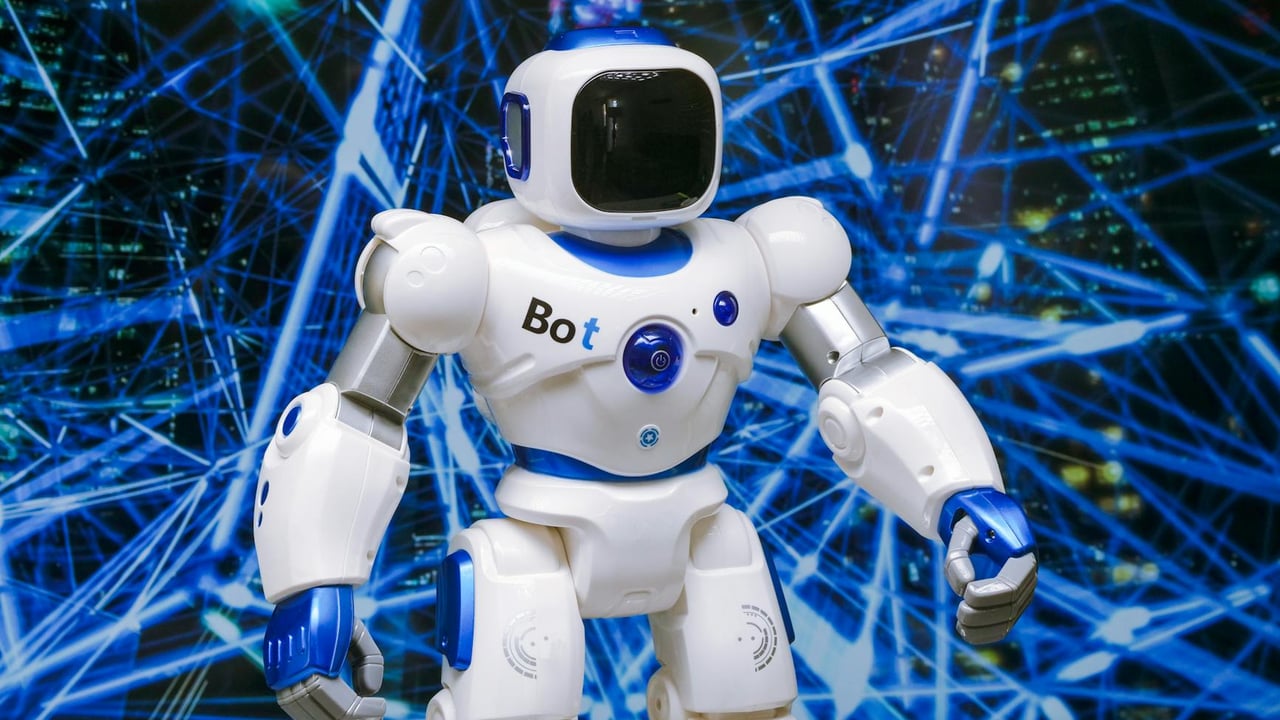

This Lunar New Year the silhouette of a new domestic horizon was visible on national television: humanoid robots shared the spotlight on CCTV’s Spring Festival Gala and performed across city centres and factory lines. After their first appearance in 2025, 2026 expanded that debut into a broader showcase, with multiple Chinese robotics firms sending advanced bipedal machines on stage to dance, perform martial arts and join comic sketches with veteran performers.
The performers are not just stage props. Companies such as Yushu Technology (宇树科技), Magic Atom (魔法原子) and Galaxy General (银河通用) presented machines with improved dynamics and coordination: Magic Atom’s Magicbot Z1 executed 360‑degree spins, one‑handed handstands and high kicks; Galaxy General promises autonomous decision‑making in complex, unstructured settings; and Yushu’s G1/H1 robots will partner with human dancers in a new Spring Gala routine. At the same time, Songyan Power’s humanoid has been cast opposite actress Cai Ming in a New Year sketch that explicitly frames robots as part of everyday life.
Beyond the cameras, the story is about deployments and repeatable service. UBTECH’s Walker S2 is already operating in automotive and logistics settings, coordinating with mobile platforms under UPilot orchestration to automate parts supply. Galaxy General reports humanlike robots running 24/7 retail micro‑warehouses and a network of more than 100 autonomous “space capsule” convenience stores in over 20 cities, while Zhifang’s “Smart Cube” service spaces have been serving coffee and ice cream autonomously for weeks at tourist and urban sites.
This parallel rollout—cultural visibility plus operational use—reveals a deliberate national narrative: humanoid robots are no longer only a technological spectacle but a practical tool. Financial analysts and broker notes cited in domestic coverage advise caution, however, urging investors to track which companies can secure mass‑production certainty, meaningful cost reductions and efficiency gains. A note from Dongwu Securities flagged key technology gaps likely to determine winners, including dexterous end effectors, axial‑flux motors and lightweight materials, while observers elsewhere point to Tesla’s Optimus program as a looming benchmark for scale.
The implications are both commercial and geopolitical. Commercially, a cluster of Chinese firms is refining modular autonomy stacks, multi‑agent coordination and manufacturing pipelines that could shorten the timeline to large production runs. That would accelerate automation in logistics, retail and light assembly and change the economics of low‑margin service tasks. Geopolitically, rapid Chinese progress in humanoid platforms would place the country among the leading developers of embodied AI, with knock‑on effects for supply chains, standards and talent competition.
Constraints remain tangible. Theatre choreography can be carefully rehearsed; industrial reliability requires sustained uptime, maintainability and safety certification. Power density, tactile manipulation, software robustness and per‑unit cost still limit rapid substitution of human labour for many tasks. Moreover, long‑term business viability hinges on unit economics: deployment counts are impressive, but profitability depends on hardware costs, service models and integration with broader automation systems.
For now, the Lunar New Year performances are an effective signalling device. They normalise humanoid machines in popular culture while giving engineers a live stress test under public scrutiny. If the industry can translate choreography into dependable, affordable fielded services, 2026 may be remembered as the year humanoid robots began to move from being noticed to being needed.