
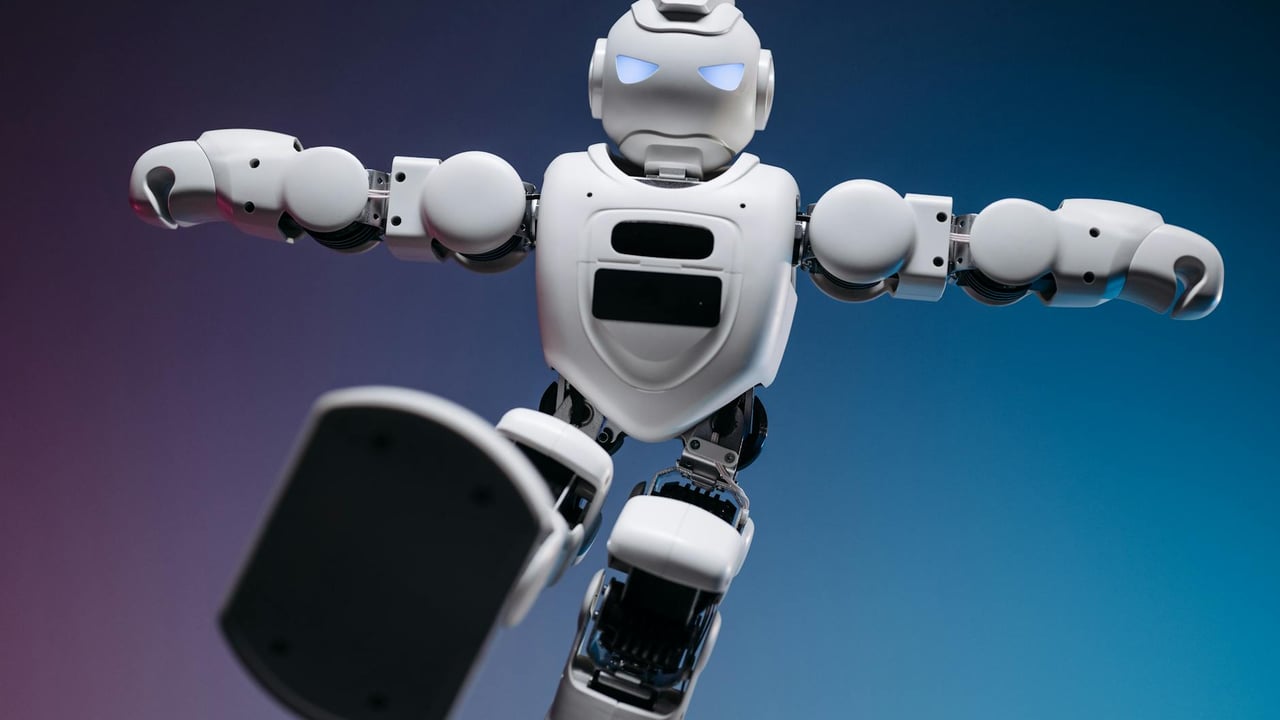

China’s Spring Festival Gala this year featured an unusual cast: multiple humanoid and legged robots sharing prime-time stage time with pop stars and comedians. Clips of coordinated martial-arts routines and dancing machines quickly dominated social-media search lists, turning the once-technical spectacle of robotics into a mass-market talking point.
The appearances were carefully choreographed and theatrically effective. Several domestic robotics firms — ranging from established startups to newer entrants — used the Gala as a platform to showcase progress in motion, balance and human-like posture. That public visibility has a purpose beyond spectacle: it signals product maturity to investors, customers and government purchasers alike.
The recent surge in attention reflects two parallel dynamics. One is a genuine technical advance: improvements in actuators, perception stacks and integrated control software are making more complex demonstrations possible. The other is a marketing and capital cycle in which IPO talk, concept-stock moves and headlines amplify each staged performance into broader investor enthusiasm.
Yet the gap between a rehearsed television routine and a practical, affordable household humanoid remains wide. Core limitations persist in energy density, reliable manipulation in unstructured environments, and the “brain” — the software systems that combine perception, planning and safe interaction. For most tasks people imagine for robots at home, cheaper, more useful solutions today are specialized arms, mobile platforms or cloud-assisted services rather than full humanoid bodies.
The Gala moment is important for reasons beyond technology. Inclusion in China’s most-watched cultural event confers legitimacy; it normalizes robotics in public imagination and implicitly endorses the sector’s strategic value. That cultural legitimacy helps companies secure government contracts, talent and media narratives that feed the next funding round.
International comparisons matter. Western firms and research labs continue to push capabilities in dynamic locomotion and manipulation, but China’s advantages lie in scale, manufacturing ecosystems and a large domestic market ready to absorb robotics in logistics, retail and eldercare. The race is less about a single technology leader and more about ecosystems: supply chains, data access, integration with services and regulatory environments.
What to expect next is clear in pattern if not in precise timing. In the near term, robotics will continue to find footholds where the economic case is strongest — warehouses, factories, outdoor inspection and managed-service venues. Consumer-facing humanoids that change everyday life for most households remain years away and will depend on breakthroughs in cost, battery technology and trustworthy autonomy.
The Spring Festival Gala has turned robots into a national conversation. That is politically and commercially useful for the firms involved, but it also risks inflating expectations. Policymakers, investors and the public should treat the televised choreography as a milestone of publicity, not as proof that humanoid robots are imminent household helpers.