
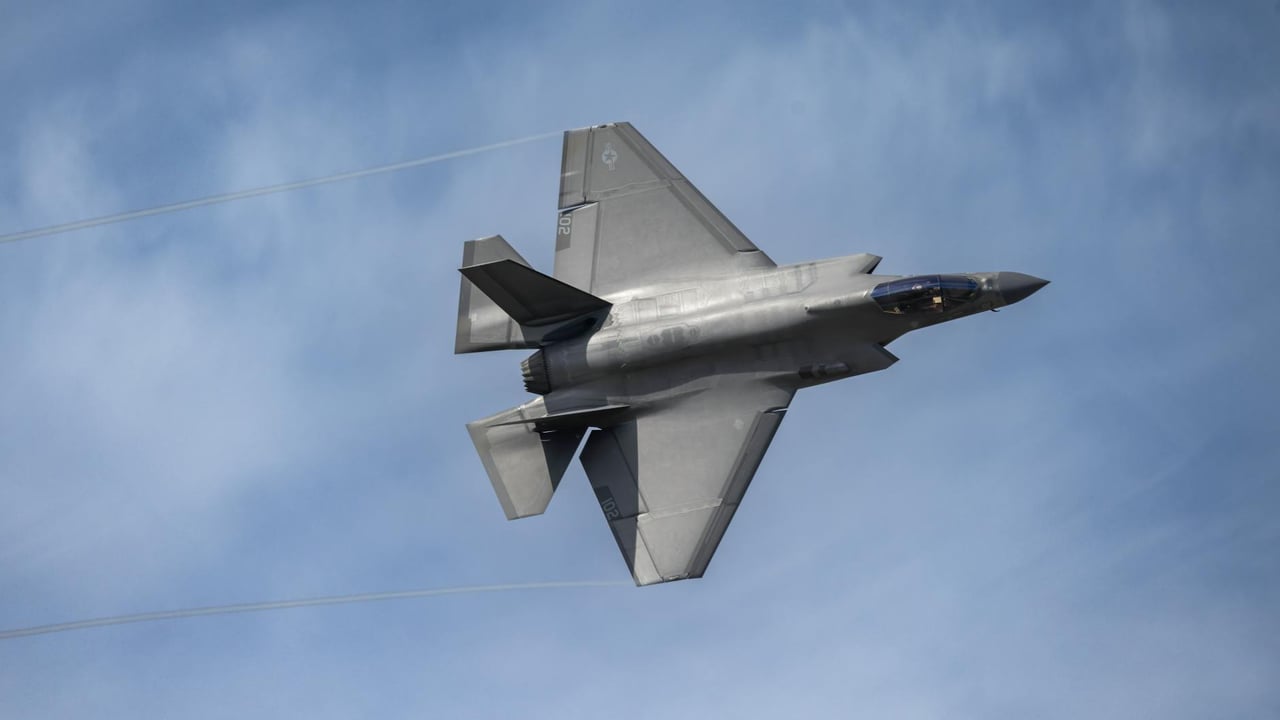

On February 16, Chinese state broadcaster CCTV reported that 18 F-35A Lightning II stealth fighters based at RAF Lakenheath in Britain departed for the Middle East, supported en route by aerial refuellers. The jets flew in three‑ship formations and, by CCTV's account, represented one of the largest single F-35 movements into the region in recent months. The deployment is both operational — moving combat-capable aircraft within reach of potential contingencies — and political, a visible demonstration of American resolve.
The dispatch of a sizable F-35 force reflects how the United States is currently calibrating its military posture amid heightened tensions with Iran. Washington has in recent months redistributed high-end assets to ensure options for defence of personnel, bases and regional partners, and to deter attacks on shipping and critical infrastructure. Sending aircraft from a forward European base rather than from the continental US underlines the value of allied basing and rapid repositioning in crisis management.
The F-35A brings stealth, advanced sensors and networked situational awareness that together broaden the US military's surveillance and strike options in a contested airspace. Tanker support for the transit underscores the logistical tail required to project air power over long distances and sustain operations once on station. Those capabilities increase deterrence value but are not a panacea: eighteen jets are meaningful tactically yet limited relative to the scale of the region and introduce sustainment, basing and political constraints.
The move is a deliberate signal to Tehran and to US partners in the Gulf and beyond, meant to reassure allies while complicating Iranian planning. At the same time, such visible deployments raise the risk of escalation or miscalculation, particularly if paired with other forward-postured forces, and they can harden negotiating positions. For policymakers, the challenge will be to preserve credible deterrence without foreclosing diplomatic space or amplifying the very insecurity the deployments aim to suppress.