U.S. Fighters Scramble Over California for Unknown Objects Later Identified as Weather Balloons

U.S. F-16s scrambled twice on 15 February to investigate high-altitude objects over northern California and Nevada; NORAD later determined the contacts were meteorological balloons and not a threat. The response underscores persistent post-2023 sensitivity to unidentified aerial objects and the operational burden of distinguishing benign payloads from hostile surveillance.

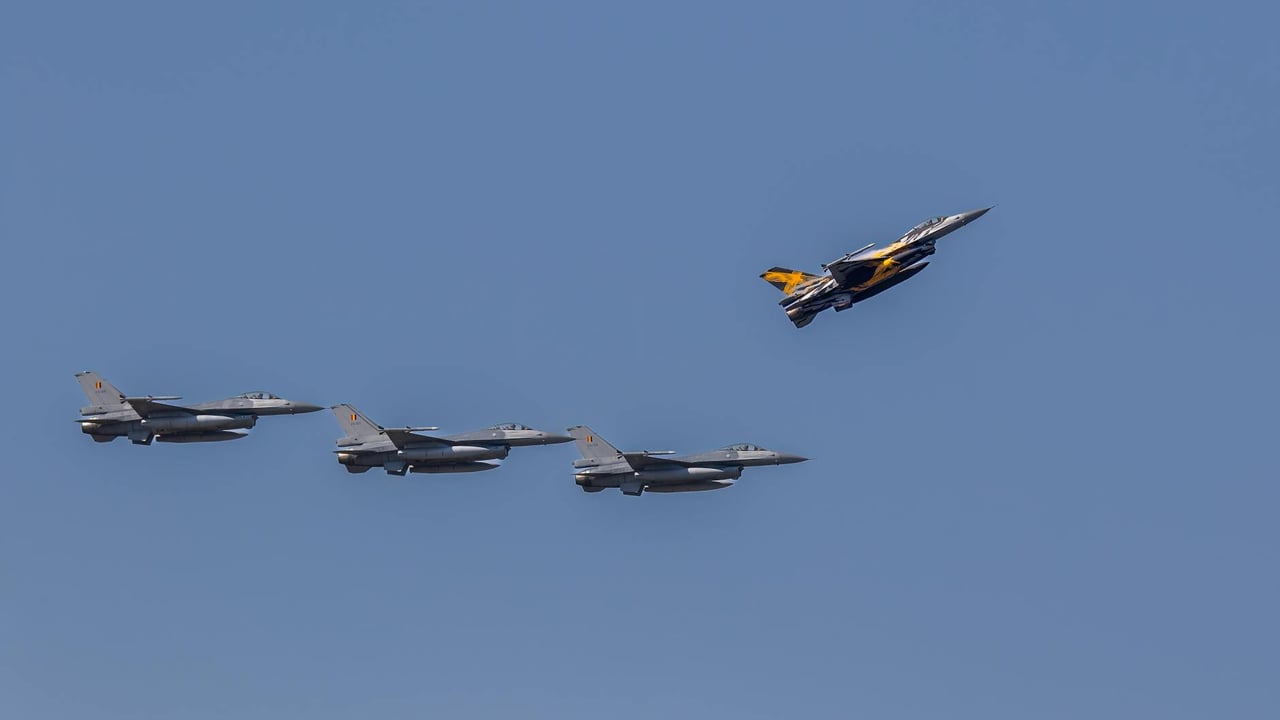
Aerial view of F-16 fighter jets flying in formation against a clear blue sky.

Key Takeaways

  • 1Two F-16s from March Air Reserve Base were launched twice on 15 February to intercept unidentified objects over northern California and Nevada.
  • 2A civilian cargo aircraft reported a glowing object before fighter arrival; the jets conducted visual identification sorties at about 6:30 a.m. and again around 10:45 a.m.
  • 3NORAD tracked two objects moving northeast off the mid-northern California coast and assessed them as meteorological balloons with no maneuver capability.
  • 4Authorities concluded the objects posed no military or civilian aviation threat and did not require kinetic action.
  • 5The incident highlights continuing high alertness following high-altitude balloon incidents since 2023 and the resource costs of interception protocols.

Editor's
Desk

Strategic Analysis

This episode illustrates a permanent shift in U.S. airspace management since the high-profile balloon incident in 2023: unidentified high-altitude objects now trigger rapid military responses and public attention. That reflex reduces the risk of being caught off-guard by a genuine surveillance or weapons platform, but it also strains resources and raises the prospect of misclassification. The real policy challenge is calibrating detection and response systems to distinguish routine meteorological or scientific balloons from adversarial surveillance without defaulting to fighter scrambles that carry political and operational costs. Investments in more discriminating sensors, clearer civil-military notification channels, and, where possible, advance notification of legitimate balloon flights would reduce friction and the potential for unnecessary escalation. Diplomatically, repeated near-miss or ambiguous incidents will press the United States to press partners and competitors for norms governing high-altitude balloons and for transparency when states or commercial actors launch high-altitude payloads near sensitive airspace.

China Daily Brief Editorial
Strategic Insight
China Daily Brief

Two U.S. F-16s were scrambled over Nevada and northern California on 15 February after pilots and air-traffic controllers reported unidentified objects at high altitude, only for North American Aerospace Defense Command to later assess the items as benign meteorological balloons. The jets—launched from March Air Reserve Base—were sent twice that morning and spent several hours in the area to visually identify and track the contacts.

Flight data and air-traffic communications show a civilian cargo aircraft first reported a glowing object in controlled airspace before the fighters arrived, describing it as luminous and then dimming. The first intercept occurred at about 6:30 a.m. Pacific time, with the fighters remaining on station for roughly two and a half hours before returning; a second scramble took them back north around 10:45 a.m., after which they departed about 35 minutes later.

NORAD later reported it had detected and followed two high-altitude objects off the mid-northern California coast moving northeast. The command evaluated both as matching typical meteorological balloon characteristics—non-maneuvering, not posing a military threat and posing no known risk to civil aviation—so no kinetic action was taken.

The episode is the latest instance of heightened U.S. sensitivity to unexplained aerial contacts in the post-2023 environment. Since a high-profile Chinese surveillance balloon traversed U.S. airspace and was shot down in early 2023, American defence and aviation authorities have adopted a lower threshold for rapid interception and identification of unapproved high-altitude objects, particularly those in controlled airspace.

Operationally, such scrambles are precautionary: fighters are tasked to visually identify, deter any hazards to civilian aviation and evaluate potential intelligence value. But frequent intercepts impose costs in pilot hours, sortie tempo and air-reflex resources, while also creating public and diplomatic optics that can amplify routine phenomena into national-security stories.

That NORAD judged these two objects harmless removes an immediate safety or security concern, but it does not close the policy questions raised by repeated unidentified-air-object incidents. Authorities will likely continue to refine notification protocols for civilian agencies and consider better radar, optical and electronic means to discriminate between benign balloons and potential surveillance platforms without defaulting to costly fighter deployments.

Share Article

Related Articles

📰
No related articles found