
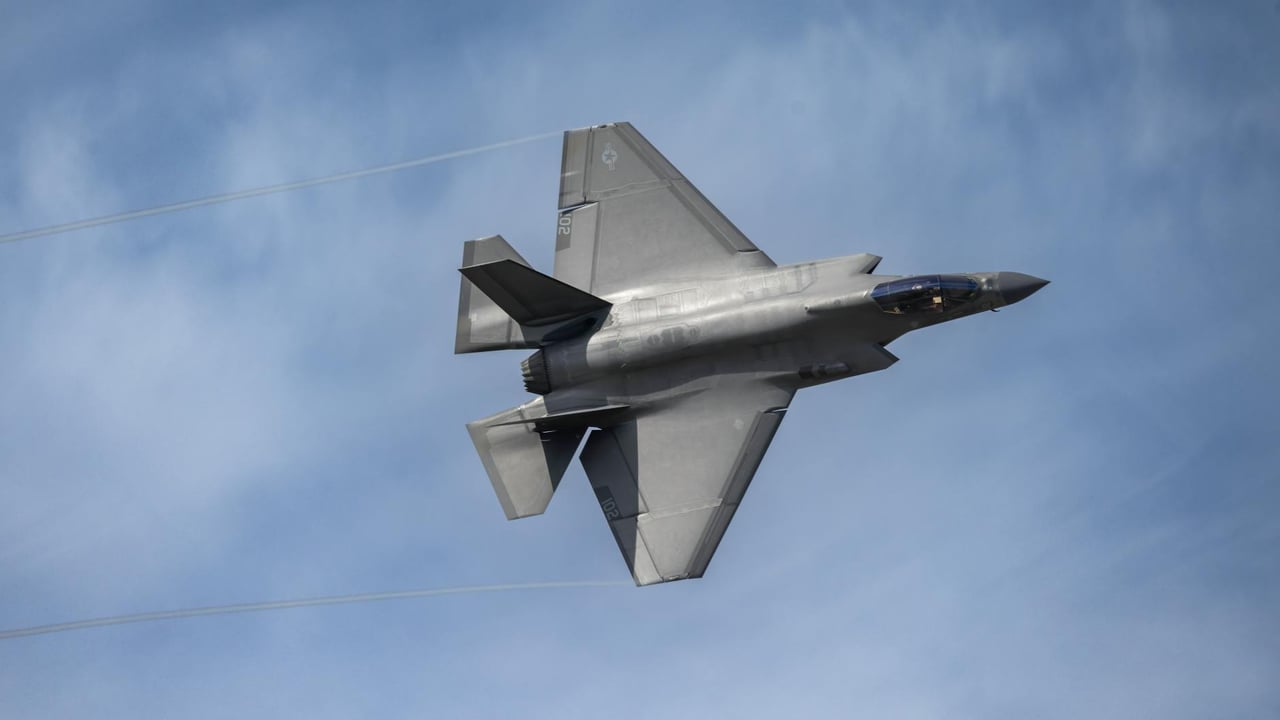

The United States has dispatched 18 F‑35A Lightning II fighters from RAF Lakenheath to the Middle East, flying in three‑ship formations and supported by tanker aircraft. The deployment, reported on 16 February, is one of the largest single movements of F‑35s into the region in recent months and comes amid heightened tensions with Iran.
Moving a squadron‑sized element of stealth fighters from a UK base underscores Washington’s intent to project advanced air power quickly and visibly. Tanker support for the transits demonstrates logistical planning for sustained operations at extended range, not merely a symbolic overflight. The choice of Lakenheath as the launch point highlights ongoing NATO‑US basing arrangements that allow rapid relocation of forward‑capable platforms.
The F‑35 brings a blend of stealth, sensor fusion and networked communications that is valuable for both deterrence and contingency operations. In a theatre with dense air defenses and complex maritime chokepoints, those attributes make the type useful for air superiority, precision strike, suppression of enemy air defenses and over‑the‑horizon intelligence collection. Deploying 18 jets raises the operational tempo beyond routine rotations and increases capability to sustain multiple concurrent missions.
Beyond capabilities, the move is a deliberate political signal to Tehran and to US partners in the Gulf. It reassures regional allies of American commitment while increasing the cost to any actor contemplating strikes on US forces or interests. At the same time, such visible force postures carry risks: they can deter aggression but also sharpen incentives for adversaries to respond with asymmetric or proxy actions that complicate escalation management.
The deployment reflects a broader pattern of the United States cycling more advanced assets into tension points rather than relying solely on carriers or local bases. That approach offers flexibility but also demands persistent tanker, maintenance and command‑and‑control capacity. How Iran and its regional proxies react will determine whether the move calms a crisis through deterrence or contributes to a cycle of reciprocal escalations.