
# AI compute
Latest news and articles about AI compute
Total: 10 articles found

From TikTok Refugees to Transformer Shortages: Ten Unexpected Business Shocks That Defined China in 2025
A string of unexpected developments in 2025—from TikTok users migrating to Xiaohongshu, to a transformer shortage limiting AI scalability—upended Chinese business. The year highlighted how geopolitics, surging technological demand and shifting consumer culture can swiftly elevate winners and expose strategic weaknesses.

From Supercomputer Roots to Server Floors: China’s Many‑Core Chips Race to Close the AI‑Compute Gap
A new server production line in Jiangsu bundles Loongson CPUs with Taichu Yuange’s heterogeneous many‑core AI accelerators as China pursues an indigenous, energy‑efficient AI compute stack. Backed by policy and driven by demand for HPC+AI, this approach challenges the dominant GPGPU model but faces ecosystem, utilisation and commercialisation hurdles.

China’s AI Surge Meets Autonomy’s Commercial Moment — Fund Managers and Waymo Pivot to a New Phase of Scale
Rapid generational gains in Chinese AI models and compute infrastructure, paired with Waymo’s adoption of a China‑made chassis for its new Ojai taxi, underscore 2026 as an inflection point for AI and autonomous vehicle commercialisation. Index funds such as Tianhong’s CSI AI thematic product are positioning to capture demand across optics, chips, servers and applications, though deployment risks and regulatory hurdles remain.

China’s Small‑Cap Growth Board Rallies on a Wave of AI Compute Stocks as Consumption Lags
China’s ChiNext and tech‑heavy STAR board outperformed as investors poured money into stocks tied to AI computing power and data‑centre infrastructure, lifting several mid‑caps to multi‑day gains. The rally was narrow: overall market breadth was weak with more than 3,200 decliners, and consumer sectors registered significant losses.

Musk Warns of an AI Power Crunch — and Suggests Moving GPU Farms to Space
Elon Musk warned that skyrocketing GPU production could outpace electricity supply, potentially leaving large AI clusters unable to power up. He suggested that space-based data centres might become economically attractive if terrestrial power capacity fails to keep pace, a claim that highlights broader tensions between AI compute demand and grid capabilities.

Google Doubles Down on AI Compute: $175–185bn CapEx, Gemini Adoption, and a Cloud Surge
Alphabet reported strong 2025 results and announced a dramatic increase in 2026 capital expenditure — $175–185 billion — to scale AI compute and data‑centre capacity. Gemini 3 adoption, a 48% jump in cloud revenue, and falling model service costs underpin management’s argument that the spending is necessary to meet surging AI demand.

Memory Market Hits a 'Super Cycle' as Prices Surge and Chinese Suppliers Reap Windfall
From Q3 2025 a sharp rally in global memory prices has produced a 'super cycle' that propelled DRAM and NAND spot prices up more than 300% cumulatively. Chinese storage suppliers have reported improved earnings, and research houses forecast continued price gains into early 2026 driven by AI and datacentre demand, though cyclical risks and capacity responses could temper the upswing.
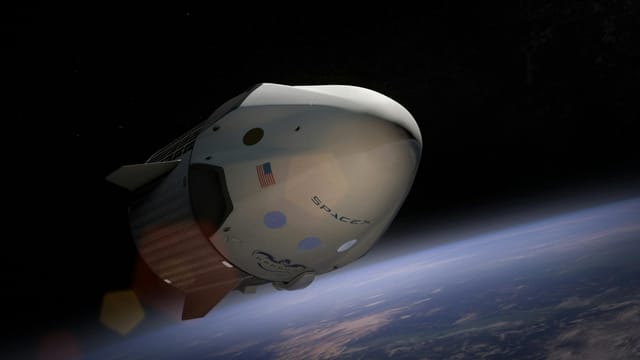
SpaceX Files to Put a Million AI-Ready Satellites in Orbit — and China Says Commercial Space Will Drive 2026 Markets
SpaceX has applied to the FCC to deploy up to one million satellites as an "orbital data centre" for AI inference, a proposal that reframes space infrastructure as a compute frontier. Chinese brokerages, responding to domestic launch advances, have identified commercial space as a likely market theme for 2026, spotlighting investment opportunities and strategic competition.

SpaceX Proposes a Million‑Satellite 'Orbital Data Center' to Power AI — but Approval, Cost and Safety Are Up in the Air
SpaceX has applied to the FCC for permission to deploy and operate up to one million satellites as an "Orbital Data Center" designed to host AI compute in space, linking to Starlink via optical intersatellite links and relying on Starship launches. The plan raises immediate questions about regulatory approval, collision risk, financing, and geopolitical and commercial consequences for cloud and satellite sectors.
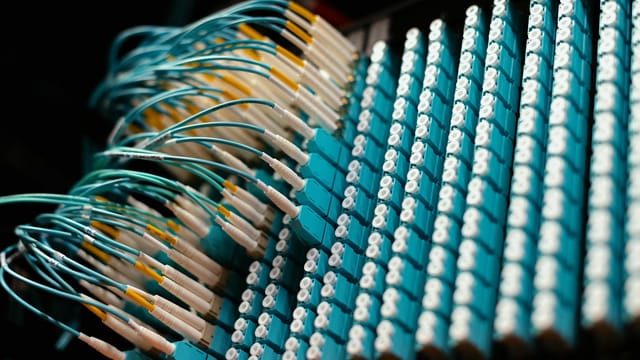
China Optical-Module Supplier Poised for Near-Double Profit as AI-Driven Data‑Center Spend Surges
Zhongji Xuchuang forecast a near‑doubling of 2025 net profit to RMB 9.8–11.8 billion, driven by surging demand for high‑speed optical modules from data‑centre and compute expansion. The guidance highlights how AI and cloud capex are boosting suppliers in China’s photonics supply chain, though cyclical demand and competitive pressures pose risks to sustainability.