
# AI%20chips
Latest news and articles about AI%20chips
Total: 26 articles found
Nvidia’s $20bn Bet on ‘Extreme’ Inference Chips Signals a Shift from Training to Cheap, High‑Throughput AI
Nvidia’s roughly $20 billion acquisition of Groq’s technology and team marks a strategic bet that AI’s commercial future lies in low‑cost, high‑throughput inference rather than giant training clusters. Chinese startups and spin‑outs are racing to produce specialized inference chips, aiming to slash per‑token costs and capture regional markets as AI applications scale rapidly.
China’s Cambricon Forecasts Strong 2025 Profit as AI Compute Demand Rises
Cambricon expects 2025 net profit of ¥1.85–2.15 billion, a year‑on‑year turnaround driven by stronger AI compute demand and successful product deployments. The result signals that Chinese AI chipmakers are beginning to convert rising demand and policy support into commercial profit, though challenges around scaling, margins and competition remain.
Chinese Chipmaker Ziguang Guowei Rules Out Nvidia Buy, Underscoring Limits of Cross‑Border Tech Acquisitions
Ziguang Guowei, a Chinese semiconductor firm, told investors it has no plans to acquire Nvidia. The response highlights practical, regulatory and geopolitical obstacles to cross‑border purchases of cutting‑edge chipmakers and points to China’s continued focus on building domestic capabilities.

China’s Big Tech Escalates the AI Arms Race: ByteDance Vows to “Climb Peaks” as Alibaba and Tencent Counterpunch
ByteDance’s CEO Liang Rubo has set an ambitious 2026 agenda, prioritising the Dola assistant and global talent incentives to secure a leading position in AI model capability. Alibaba and Tencent are rapidly countering with chips, cloud integrations and consumer promotions, turning early 2026 into an industry‑wide scramble across applications, silicon and datacentres.
Chinese AI-GPU Maker Reports Revenue Surge but Still Posts Large Loss; Losses Narrow in 2025 Forecast
Muxi Co. forecasts 2025 revenue of 1.6–1.7 billion yuan, more than doubling year‑on‑year, while predicting a narrowed net loss of 650–798 million yuan versus a 1.409 billion yuan loss in the prior year. The company attributes improvement to stronger GPU sales, AI integration with industry customers, and lower share‑based compensation.

Trump Slaps 25% Tariffs on South Korea as Markets Rally and Microsoft Unveils New AI Chip
President Trump announced a unilateral increase in tariffs on South Korean cars, lumber and pharmaceuticals from 15% to 25%, citing Seoul’s failure to ratify a bilateral trade deal, while U.S. markets rose as investors focused on tech earnings and Microsoft’s unveiling of its Maia 200 AI chip. The tariff move risks straining a strategic alliance and creating supply‑chain uncertainty even as competition among cloud providers intensifies over in‑house AI hardware.
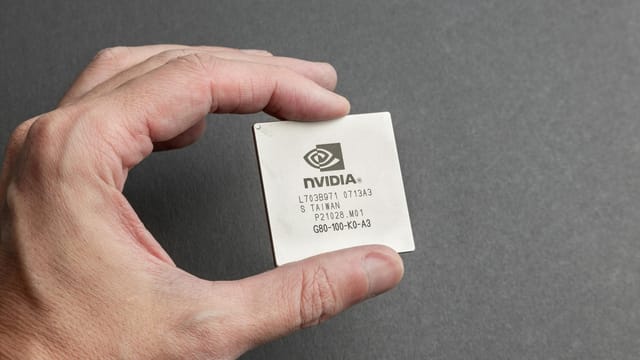
Microsoft’s Maia 200 Raises the Stakes in the Cloud AI Chip War
Microsoft has started deploying its Maia 200 AI accelerator built on TSMC 3nm, claiming substantial performance and cost advantages versus Amazon’s Trainium and Google’s TPU. The chip — designed to run large models efficiently at low power — is part of Microsoft’s strategy to secure more predictable, cheaper AI compute for Azure and to lessen reliance on Nvidia. An SDK preview is available to developers, while broader cloud rental availability is promised for the future.

Why Jensen Huang’s Shanghai Market Stop Matters: Nvidia, Chinese AI Ambition and the Race for Compute
Nvidia CEO Jensen Huang’s modest Shanghai market visit underscored the company’s ongoing commercial commitment to China even as export controls and rapid domestic innovation reshape the competitive landscape. Chinese advances in open‑source models, homegrown accelerators and emerging photonic computing are narrowing reliance on foreign GPUs and creating a more diversified global AI infrastructure.
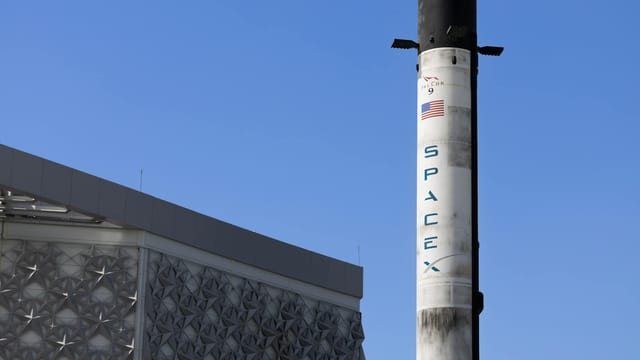
Musk Warns AI Growth Will Run Up Against Power Limits — and Plans Solar AI Satellites
Elon Musk cautioned that electricity supply, not chip inventory, may soon cap AI deployment, predicting that chip output could exceed the number of units actually powered. He also proposed launching solar-powered AI satellites with SpaceX in the coming years as a way to sidestep terrestrial power constraints.

Alibaba to Float T‑Head Chip Unit as AI Hardware Ambitions Boost Shares
Alibaba plans to take its AI‑chip unit T‑Head public, a move that boosted the parent company’s U.S. pre‑market shares. The listing aims to fund and legitimise Alibaba’s push into in‑house AI accelerators, but faces manufacturing, software and competitive hurdles amid broader geopolitics over semiconductors.

From Chips to Fields: China’s Week in Markets, AI Supply Chains and Tech Control
Nvidia’s Jensen Huang confirmed that Nvidia has overtaken Apple as TSMC’s largest customer, signalling a permanent shift of chip demand toward AI infrastructure. Domestically, China reported record grain output and continued construction of high‑standard farmland while expanding duty‑free shopping and tightening controls around software that accesses WeChat data. The mix of industrial reorientation, food-security measures and stricter digital governance will shape supply chains, markets and developer ecosystems.

Suzhou Bets on 'AI+': From Chip to One‑Person Startups, a City Repositions to Lead Industrial AI
Suzhou’s latest five‑year planning proposal makes artificial intelligence a central pillar for industrial upgrading, data infrastructure and entrepreneurship. The city aims to build a full‑stack AI ecosystem—from chips and datasets to platforms and applications—while branding itself as China’s go‑to city for single‑person startups and promoting AI exports and standards participation.