
# China%20AI
Latest news and articles about China%20AI
Total: 20 articles found

Two Spring Festivals, One Industry: How China’s Tech Giants Turned AI into a Holiday Battle for National Reach
China’s AI competition has shifted from model development to a consumer battleground during two consecutive Lunar New Year campaigns. Alibaba, ByteDance, Tencent and Baidu used subsidies, embedded assistants and viral features to fight for national traffic, while smaller firms pursue agent‑style products that combine multiple models. The outcome will reshape who controls mass AI touchpoints in China, narrow the US–China model gap and raise barriers for smaller players unless they adopt alternative, interoperable strategies.

Chinese AI Chipmaker Taichu Adapts GLM‑5.0 and Qwen3.5 to Its Homegrown T100 Accelerator
Taichu (Wuxi) Electronics has completed deep adaptation of GLM‑5.0, Alibaba’s Qwen3.5 and DeepSeek‑OCR‑2 to its in‑house T100 accelerator, enabling these open models to run efficiently on domestic hardware. The work advances China’s effort to build a full AI software‑hardware stack and reduce reliance on foreign GPUs, though performance parity with global leaders remains an open question.

China’s Kimi Rockets to a $10–12bn Valuation After Two Rapid Funding Rounds Exceeding $1.2bn
Kimi, a Chinese AI startup also known as Yue Zhi Anmian, has raised over $700 million in a new funding round led by existing investors, bringing two consecutive financings to more than $1.2 billion and valuing the company at $10–12 billion. The deals signal strong investor appetite for large AI models in China and a scramble by tech giants to secure model supply, but commercialisation and regulatory risks remain significant.

China’s Spring Gala Becomes Global Showcase for Homegrown AI Video Model
Douyin Group says China’s 2026 CCTV Spring Festival Gala was the first public project to deeply use Seedance 2.0, a domestic AI video‑generation model. The deployment signals mainstreaming of generative video in China, with implications for the media industry, domestic AI vendors, and debates over authenticity and regulation.

China’s AI Surge Meets Autonomy’s Commercial Moment — Fund Managers and Waymo Pivot to a New Phase of Scale
Rapid generational gains in Chinese AI models and compute infrastructure, paired with Waymo’s adoption of a China‑made chassis for its new Ojai taxi, underscore 2026 as an inflection point for AI and autonomous vehicle commercialisation. Index funds such as Tianhong’s CSI AI thematic product are positioning to capture demand across optics, chips, servers and applications, though deployment risks and regulatory hurdles remain.

China’s DeepSeek Pushes Context Limits — and Triggers a Backlash Over a Colder, ‘Faster’ Model
DeepSeek activated a grayscale update extending context length to 1 million tokens, prompting user complaints that the assistant sounds colder and less personalised. Industry sources say the build is a speed‑focused variant intended to stress‑test long‑context performance ahead of a V4 launch, highlighting trade‑offs between throughput and conversational quality. The episode illustrates the wider tension in scaling LLMs: architectural gains can come at the cost of user experience and trust.

A Night of Acceleration: Zhipu’s GLM‑5 Debuts as MiniMax and DeepSeek Race to Keep Up
Three leading Chinese AI firms unveiled near‑simultaneous upgrades that signal a shift from demo‑level coding assistants to production‑oriented, agentic systems. Zhipu launched GLM‑5 as an open‑source foundation for long‑horizon engineering tasks, while MiniMax and DeepSeek pushed product and context upgrades aimed at real‑world throughput and extended interactions.

China’s AI “Red‑Envelope” War: Alibaba’s Qianwen Rockets to 58m Daily Users — But Will They Stay?
Alibaba’s Qianwen vaulted to 58.48 million daily users on day one of its Spring Festival cash giveaway, narrowing the gap with ByteDance’s Doubao and eclipseing Tencent’s Yuanbao. The spike underscores how massive subsidies can reconfigure app rankings quickly, but low retention figures suggest the gains may be fleeting unless platform AI capabilities and habit formation improve.

China’s Next AI Frontier: Building ‘Super Individuals’ to Turn Foundation Models into a Productivity Boom
SenseTime CEO Xu Li argues China’s AI future hinges on cultivating "super individuals" and packaging foundation models as end-to-end delivery tools that empower single people to complete tasks. He warns that treating large models only as efficiency tools risks weak commercial outcomes; productised delivery that enables individuals will drive a pronounced productivity leap.

Keling AI’s 3.0 Push: A Chinese Model Suite Aiming to Automate End‑to‑End Video Production
Keling AI has launched a 3.0 series of multimodal models—Video 3.0, Video 3.0 Omni and Image 3.0—positioned as an end‑to‑end solution for image and video generation, editing and post‑production. The suite emphasises native multimodal I/O and subject consistency, offering speed and integration for creators while raising questions about compute demands, governance and misuse risks.

SenseTime Open-Sources ‘Sense Nova‑MARS,’ Betting on Agentic Multimodal AI to Drive Execution‑Capable Applications
SenseTime has open‑sourced Sense Nova‑MARS, a multimodal Agentic VLM available in 8B and 32B parameter sizes that the company says can plan actions, call tools and deeply fuse dynamic visual reasoning with image‑text search. The move democratizes access to execution‑oriented multimodal models, accelerating research and product integration while raising safety and governance questions about agentic AI.
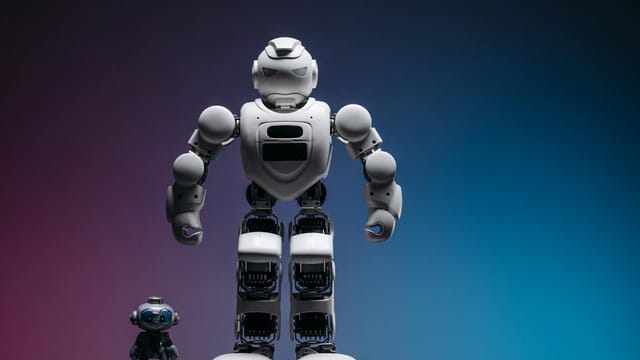
Build the ‘Brain’ for Robots and You’ll Rule AI, Says Yushu’s Founder — A Bold Bet on Robot-Centric Large Models
Yushu Technology’s founder Wang Xingxing argued that the company or group that builds a large-scale AI model tailored to robots will become the leading global AI and robotics firm. The remark underscores a wider industry shift toward embodied, multimodal foundation models that fuse perception and action, but success requires massive embodied data, hardware–software integration and viable commercial deployments.