
# GPUs
Latest news and articles about GPUs
Total: 9 articles found
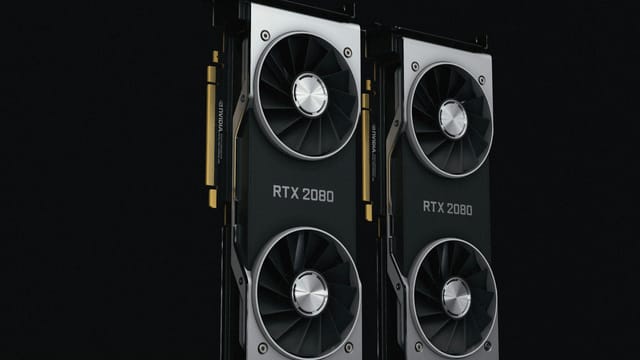
Nvidia and Meta Forge Multi‑Year AI Partnership as Meta Orders Millions of Chips
Nvidia and Meta have signed a multi‑year partnership that will see Meta deploy millions of Nvidia chips across on‑premises and cloud infrastructure. The deal secures compute supply for Meta's AI ambitions while reinforcing Nvidia's dominant position in AI hardware, with wide implications for competitors, cloud providers and energy use.
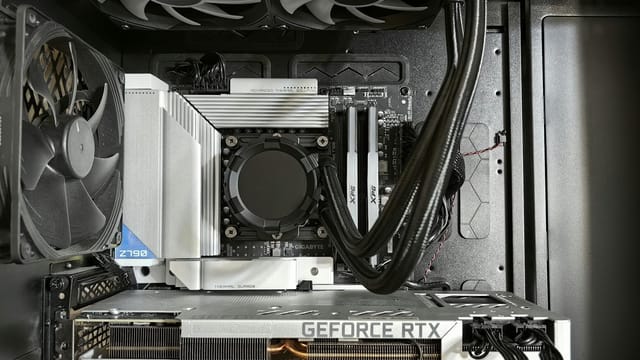
Token Tsunami and Power Limits Propel a Boom in Liquid‑Cooled AI Servers
Exploding AI token consumption and rising hardware costs are driving a surge in rented AI compute and accelerating adoption of liquid‑cooled, high‑density servers. Policy limits on data‑centre energy efficiency and the shift from training to widespread inference are making immersion cooling and edge deployment central to scaling AI affordably and sustainably.

Musk Recasts xAI as Four-Part Powerhouse — From Grok to 'Macrohard' and a Moon-Built Future
Elon Musk has reorganised xAI into four focused product teams — Grok (core model), Grok Code, Grok Imagine, and Macrohard (digital agents) — while pressing an ambitious plan to scale compute through terrestrial clusters and lunar manufacturing. The restructure follows co‑founder departures and a SpaceX acquisition that folded xAI into a larger, capital‑intensive space and social‑media strategy.

Musk Warns of an AI Power Crunch — and Suggests Moving GPU Farms to Space
Elon Musk warned that skyrocketing GPU production could outpace electricity supply, potentially leaving large AI clusters unable to power up. He suggested that space-based data centres might become economically attractive if terrestrial power capacity fails to keep pace, a claim that highlights broader tensions between AI compute demand and grid capabilities.

Musk Says Space Will Be the Cheapest Place to Run AI Within Three Years — Here’s Why That Would Upend the Cloud
Elon Musk told a podcast that within 30–36 months running large AI clusters in space will be far cheaper than on Earth, arguing terrestrial power constraints, grid bottlenecks and supply‑chain limits make orbital solar arrays economically superior. He cited higher energy yield from space solar, lower need for batteries, and simpler approvals versus terrestrial PV, while acknowledging engineering and regulatory hurdles remain.

Huang Dials Down $100bn OpenAI Talk — Nvidia Says Any Funding Will Be Evaluated 'Round by Round'
Jensen Huang said Nvidia never committed to a $100 billion investment in OpenAI and will evaluate any funding opportunity incrementally. The clarification reduces short‑term market uncertainty and signals Nvidia’s preference to remain a broadly neutral supplier rather than take on outsized financial exposure to a single AI lab.

Huang Says Nvidia Will Join OpenAI’s New Fundraise — But $100bn Claim Is Off the Table
Jensen Huang confirmed Nvidia will participate in OpenAI’s current fundraising round but denied the company would invest anywhere near $100 billion, a figure that had been reported earlier. His comments aim to reassure markets that Nvidia–OpenAI ties remain strong while tempering expectations about the scale of Nvidia’s financial commitment.

Nvidia’s Jensen Huang Confirms Company Will Invest in OpenAI — but Not the $100bn Hype
Nvidia CEO Jensen Huang said the company will participate in the current OpenAI funding round and that the investment could be Nvidia’s largest ever, though it will be far below earlier $100 billion speculation. The pledge strengthens ties between a leading GPU supplier and a top AI-model developer, with strategic benefits and regulatory complexities for both firms and their customers.
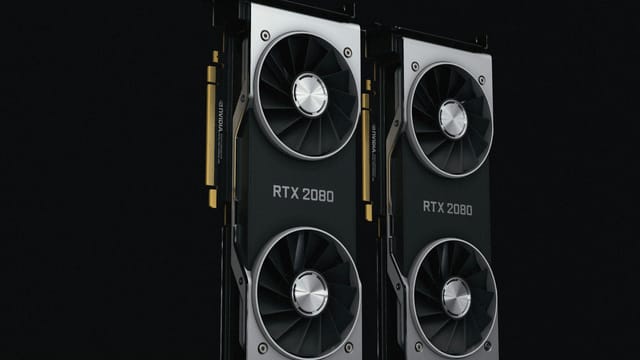
Nvidia’s Jensen Huang at Davos: AI Is Not a Bubble—It’s a Trillion‑Dollar Infrastructure Build
At Davos, Nvidia CEO Jensen Huang argued that current AI spending is the start of a vast infrastructure build rather than a speculative bubble, outlining a five‑layer model from energy to applications. He predicted trillions in additional investment, flagged GPU shortages and supply‑chain pressures, and pushed for national "AI sovereignty" while saying automation will create high‑paid technical roles even as some white‑collar jobs are displaced.