
# autonomous driving
Latest news and articles about autonomous driving
Total: 13 articles found
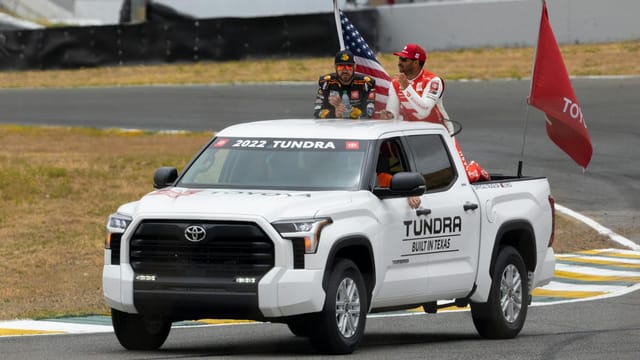
Pony.ai and Toyota’s GAC Unit Roll Out First Production Robotaxi, Signalling Move to Commercial Scale in China
Pony.ai and GAC Toyota have produced the first Botzhi 4X Robotaxi and plan to deploy around a thousand vehicles in China’s top cities in 2026. The move signals a shift from pilots to industrial-scale robotaxi operations, leveraging Toyota’s manufacturing and Pony.ai’s autonomous driving software.
China’s EVs Are Trying to Turn Cars into ‘Robots’ — But the First Step Is the Hardest
China’s Li Auto and Xpeng are reorganising to build ‘car robots’ by fusing smart cockpits and autonomous driving onto a shared AI platform. Technical, safety and organisational barriers mean the transition will be incremental: common base models and compute may be shared, but driving functions will require strict isolation and staged deployment in low-risk scenarios.
Big Recall, Local AI: China’s Auto Market Grapples with Safety and a New Wave of On‑shore Autonomy Training
FAW‑Volkswagen has recalled 206,012 domestically produced Audi Q2L cars over adhesive failures that can cause C‑pillar covers to detach. At the same time Tesla has activated a China‑based AI training centre to tailor driver assistance systems to local conditions. Together these developments illustrate the tension between fast localisation of manufacturing and the push to develop on‑shore AI capabilities for autonomy.
Tesla Sets Up an AI Training Hub in China as Autonomy Goes Local
Tesla has opened an AI training centre in China to perform local model training for its driver‑assist and China‑specific AI features, a step aimed at improving product fit and regulatory compliance. The company did not disclose the facility’s compute capacity, leaving open how extensively it plans to scale local training.
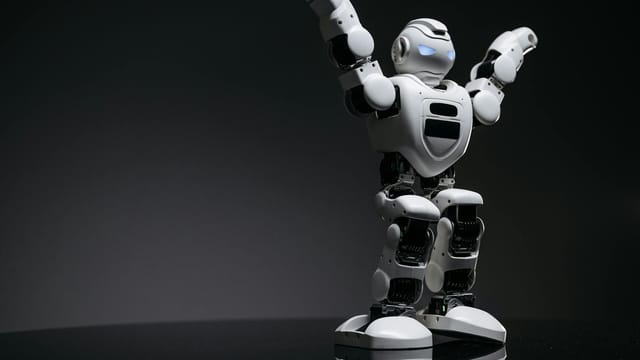
Mobileye Maps a Path from Car Chips to Commercial Humanoids — Mass Production Targeted for 2028
Mobileye has outlined plans to expand from automotive autonomy into humanoid robots after acquiring Mentee Robotics, with on‑site validation in 2026, production partnerships in 2027 and scaled deployment starting in 2028. The company sees robotics and driving automation as complementary components of a broader "physical‑AI" strategy that leverages simulation, perception and long‑tail generalization techniques.

Li Auto Recasts the Car as a Robot with New L9 — A Decade in the Making
Li Xiang announced that Li Auto’s next-generation L9 will be marketed as an ‘‘embodied-intelligence’’ robot, turning the vehicle into an active, personalised partner. The claim signals a strategic move from product to platform but will require heavy investment in sensors, compute, software and regulatory compliance to be realised.

Wuhan’s Rise: How Hubei Is Building China’s Photonics, EV and Bio-Tech Hub in the Heartland
Hubei province, led by Wuhan’s Optics Valley, is accelerating a strategic push to become a world‑class center for photonics, electric vehicles, biotech and modern agriculture. Policymakers and industry have combined research, digital manufacturing and green industrial reform to shorten commercialisation cycles and bolster supply‑chain resilience.

Hubei’s Rise: From Optics Valley to an Industrial Backbone Driving China’s Next Wave of Tech and Manufacturing
Hubei is accelerating its shift from low‑end manufacturing to higher‑value, tech‑intensive industries centred on Wuhan’s Optics Valley, electric vehicles, autonomous driving and biotech, while modernizing agriculture and cleaning up polluting industries. The province’s successes illustrate how regional industrial policy, targeted investment and university‑hospital‑industry collaboration can build supply‑chain resilience and new export capabilities.

Geely Bets Big on In‑House AI: Chairman Yin Qi Bridges Big‑Model Firm and Smart‑Driving Unit as JiaYue Raises Over ¥5bn
Geely has accelerated efforts to internalise AI by appointing Yin Qi as chairman of both its smart‑driving unit Qianli Technology and the big‑model company JiaYue Xingchen, which has just closed a B+ round topping ¥5 billion. The move aims to fuse in‑house foundational models with production vehicle terminals to boost proprietary ‘model content’ and fast‑track agent‑driven cockpits and assisted‑driving features.

Mercedes Reboots the S‑Class — Physical Luxury Meets Software Ambition as Nvidia Joins an L4 Push
Mercedes’s refreshed S‑Class combines traditional luxury cues — physical controls and enhanced passive safety — with a new MB.OS software backbone and AI‑driven features. A publicised partnership with Nvidia to pursue Level‑4 autonomy underscores the company’s strategy to reclaim vehicle control through software while preserving high‑margin, bespoke hardware offerings.
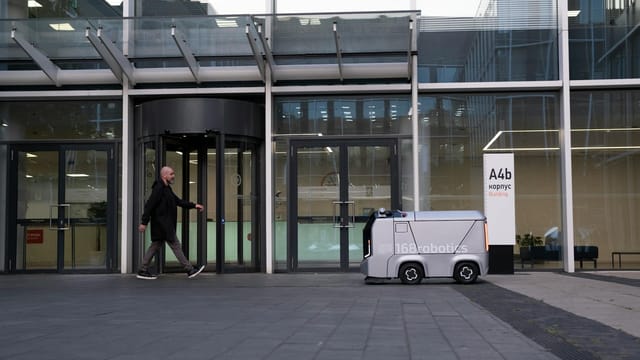
China’s QCraft Sees 2026 as the Start of a ‘Golden Decade’ for Driverless Cars — City NOA to Reach Mass Market
QCraft CEO Yu Qian says 2026 will mark the start of a decade‑long expansion in autonomous driving, with city NOA expected on mass‑market cars priced around ¥100,000. The company has passed one million vehicle deployments and argues that end‑to‑end learning, VLA and world models plus massive data loops will drive safety and scale, while pragmatic sensor choices and local adaptation will shape competition.
China’s Electric-Car Moment: From Subsidy Reliance to a Naked Competition for Tech, Range and Loyalty
China’s electric‑vehicle market crossed a critical threshold in 2025, with EV penetration topping 50 percent and charging and swapping infrastructure expanding rapidly. As subsidies taper in 2026, competition will pivot from market share driven by policy to product, software and service quality—making tech depth, cost control and ecosystem play decisive factors.