
# industrial policy
Latest news and articles about industrial policy
Total: 14 articles found

Beijing Freezes Growth of Vape Manufacturing, Tightens Rules for Capacity, Outsourcing and Exports
China's tobacco regulator has prohibited new e‑cigarette plant investments and largely barred capacity expansion through relocations or technical upgrades, while imposing strict compliance, environmental and export rules. The policy aims to rein in unlicensed production, enforce product and environmental standards, and constrain overall industry output without halting technological upgrades that meet regulatory conditions.
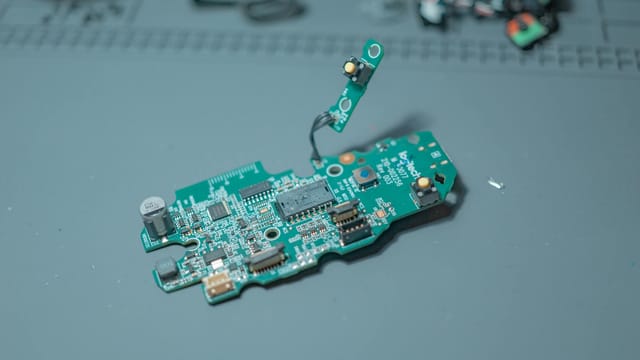
Chinese Investor Backs Gallium‑Material Startup as Beijing Eyes Fourth‑Generation Chip Supply Chains
LanHai Huateng has made a strategic investment in GaChuang Future, a startup targeting core materials for fourth‑generation semiconductors such as gallium nitride. The move signals continued investor interest in bolstering China’s upstream chip supply chain, though technical and scale‑up challenges persist.
China Orders Dozens of New Standards to Professionalise Its Technology‑Services Sector by 2027
China’s MIIT and four other ministries have issued a guide to build a standards system for the technology‑services sector and ordered the creation of more than 40 new national and industry standards by 2027. The initiative aims to professionalise services such as testing, technology transfer and IP brokerage to accelerate commercialization of R&D, while also shaping market access and potentially influencing international norms.

Xi Orders Steady, State-Led Push to Build China’s 'Future Industries' and Seize the Tech High Ground
At a January 30 Politburo study session, Xi Jinping called for a steady, comparative‑advantage driven development of China’s future industries, using state coordination and enterprise leadership to overcome technological bottlenecks. The plan emphasises mission‑oriented research, fiscal and financial support, talent cultivation, and a governance balance that manages risk while enabling innovation.
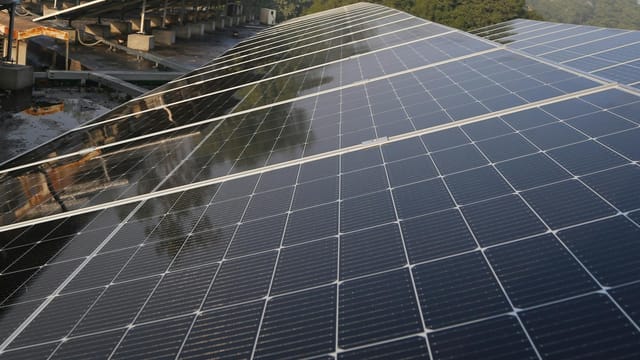
Beijing Moves to End ‘Involution’ in Solar Industry, Prioritising Order Over Price Wars
China’s MIIT convened PV industry leaders on 28 January to curb destructive “involution” in the solar sector, proposing coordinated market and legal measures — from capacity control to price enforcement — and urging the industry association to boost self‑discipline. The initiative aims to stabilise margins, improve quality and reduce trade frictions, but could cause short‑term supply tightness and higher module prices.

SK Hynix Weighs U.S. AI Investment Hub to Centralise Group’s AI Bets
SK Hynix is exploring the creation of an AI investment arm in the United States to centralise group-level AI investments and speed strategic decisions. The plan would place the company closer to cloud customers, AI start‑ups and investors, and could shift SK Hynix toward higher‑value participation in the AI infrastructure ecosystem.

Chinese AI-Compute Upstart Suiyuan Clears STAR Market IPO Hurdle, Seeks Rmb6bn to Build Homegrown GPU Stack
Shanghai Suiyuan Technology’s STAR Market IPO has been accepted as it seeks Rmb6 billion to scale AI accelerator cards, clusters and integrated solutions. Backed by Tencent and state-affiliated investors, the company sits at the intersection of China’s push for domestic AI compute capacity and growing demand for alternatives to Western GPUs.

Suzhou Targets Semiconductors, Embodied AI Robots and Low‑Altitude Economy in New Five‑Year Blueprint
Suzhou’s recommendations for its 15th Five‑Year Plan mobilise the city to cultivate semiconductors, embodied intelligence robots, advanced machine tools and a low‑altitude economy, aiming to upgrade existing industrial clusters and create new growth poles. The move reflects a local strategy to deepen technological capabilities, scale new industries through demonstrations and integrate more closely with the Yangtze River Delta’s aerospace ambitions.
Beijing Doubles Down on 6G, Quantum and Heavy Industry to Rewire China’s Tech Future
China’s MIIT announced accelerated progress across 6G, quantum, AI and heavy manufacturing, reporting substantial gains in chip‑related output, robots and new energy vehicles. Officials emphasised China’s strong position in 5G patents and early 6G trials, and outlined policy measures to fast‑track commercialization and create future‑industry hubs.

China Moves 6G From Lab to Field: Second‑Phase Trials Mark a New Stage in the Race for Next‑Gen Networks
China has begun second‑phase 6G trials, moving from foundational research to system‑level testing and field validation. The shift enhances Beijing’s ability to influence standards, bolster domestic supply chains, and shape the commercial and strategic trajectory of next‑generation wireless networks.
Beijing Offers Interest Subsidies to Spur SME Investment in Strategic Supply Chains
China’s Ministry of Finance will subsidise 1.5 percentage points of interest on qualifying fixed-asset loans to private small and micro enterprises in targeted industrial chains, effective from January 1, 2026. The one-year pilot caps subsidy per loan at RMB 50 million and channels support through a designated set of banks with central–provincial coordination and auditing mechanisms.

Beijing Offers 1.5-Point Interest Subsidy to Spur Equipment Upgrades — A Boost for Industry and SMEs
China has launched a central fiscal interest subsidy of 1.5 percentage points on fixed-asset loans for equipment upgrades, payable from loan disbursement and capped at two years. The scheme expands supported sectors, appoints 26 banks as implementers, simplifies payment procedures through pre-allocation and settlement, and runs through at least the end of 2026.