
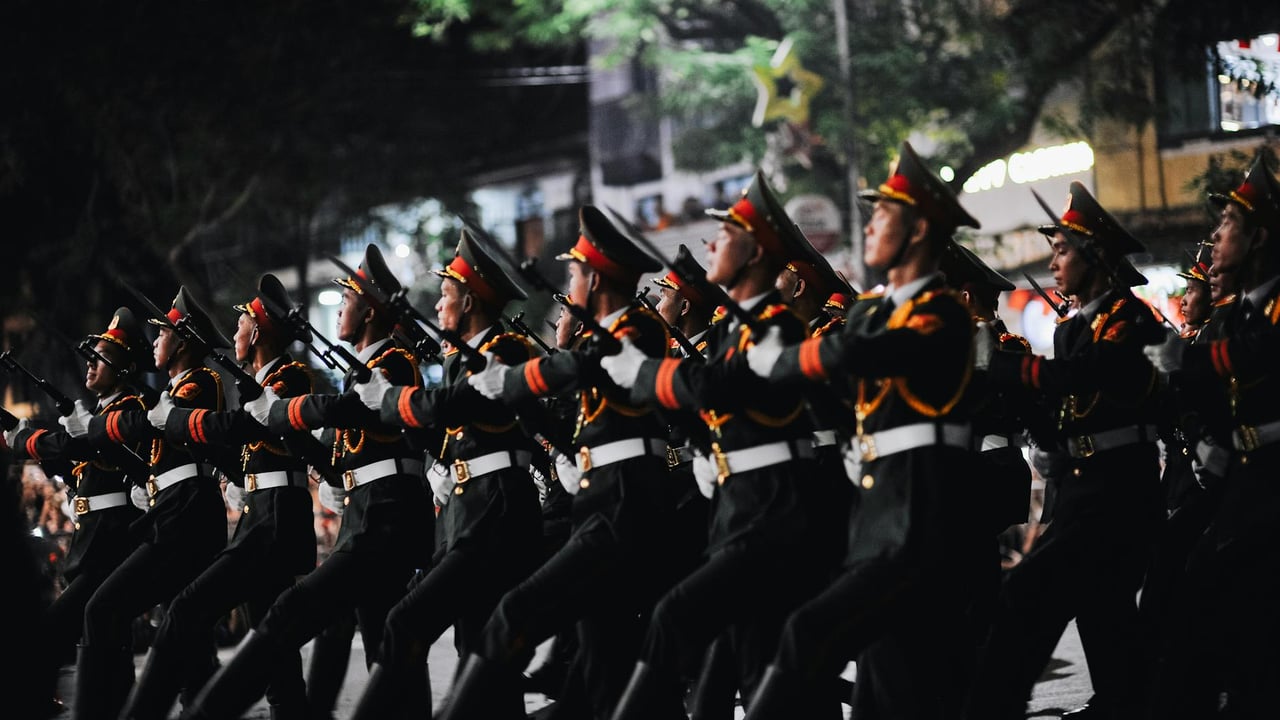

A lunar-new-year military variety show staged this month used song, spectacle and symbolism to restate a simple message: the People’s Liberation Army (PLA) remains as politically and culturally cohesive as ever. Branded with a slogan that likened patriotism to genetic code—"when the prelude plays, the DNA moves"—the 2026 military Spring Gala was less an entertainment event than a ritual of institutional reinforcement, aimed at troops, families and a wider public during the holiday season.
The programme blended familiar elements of Chinese mass performance—choral numbers, recitations, and tableaux of service life—with explicit themes of duty, sacrifice and continuity. Veterans and active personnel were presented as carriers of an immutable "military soul," a phrase increasingly prominent in official discourse about the PLA’s identity and political reliability. The production’s aesthetics and messaging echoed longstanding state efforts to fuse cultural outreach with military morale-building.
Viewed against the wider political landscape, the gala is part of an intensified habit of public-facing ceremonies that have accompanied the PLA’s modernization drive. Since the leadership’s push for a stronger, more technologically capable force, cultural work has been upgraded as a complement to hardware and training: performances and media output reaffirm the Party’s narrative that loyalty is the bedrock of combat effectiveness. Hosting such a gala during the Spring Festival—one of the nation’s most important cultural moments—maximizes reach and emotional resonance.
Domestically, the broadcast performs several tasks at once: it reassures soldiers and their families, it projects an image of unity to civilians, and it nurtures recruitment and retention by romanticizing military life. For a leadership that prizes social stability and political cohesion, these symbolic exercises help translate abstract directives about "civil-military integration" and ideological fidelity into everyday culture. They also create a persistent public association between national celebration and military virtue.
Internationally, the gala operates as soft power and signalling. It does not substitute for drills or strategic deployments, but it telegraphs a disciplined, confident institution to foreign audiences and regional observers. In moments of heightened cross-Strait and regional tension, cultural productions that emphasize readiness and unity serve as a quieter form of deterrence: an assertion that the PLA’s internal cohesion is intact and widely celebrated at home.