
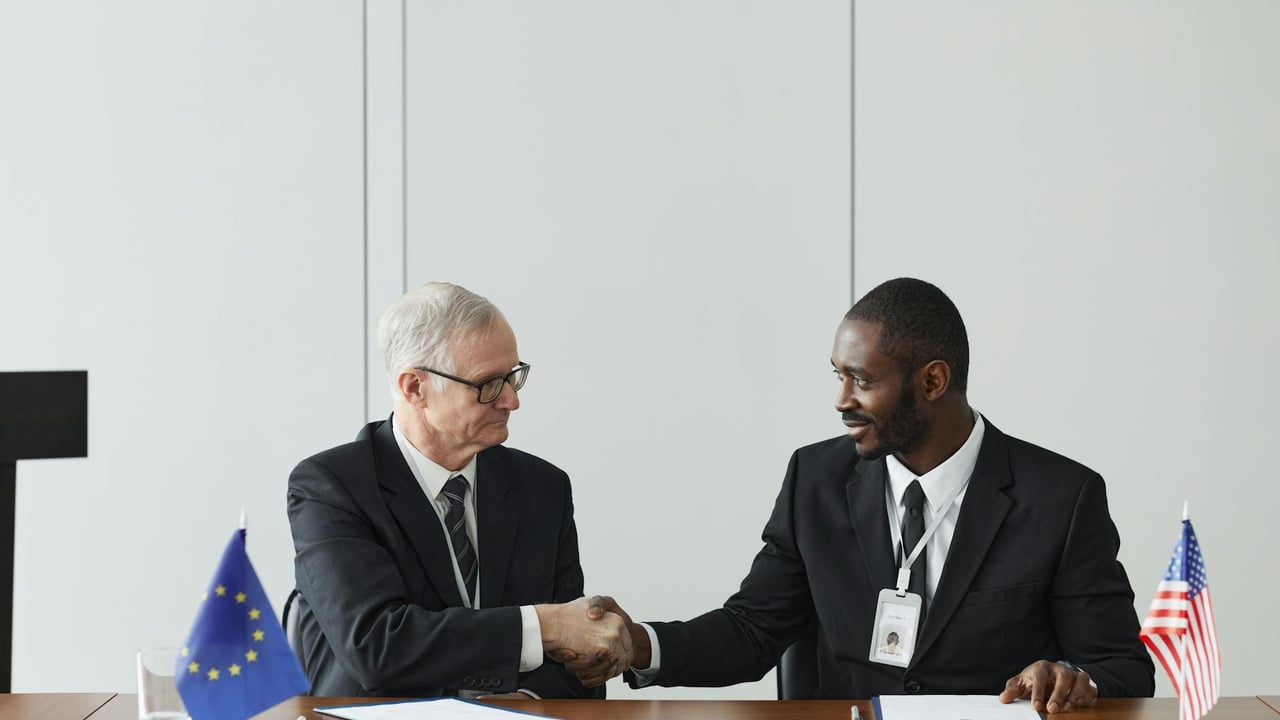

The 62nd Munich Security Conference closed under a familiar tension: ritualized Atlantic solidarity wrapped around an unmistakable message of strategic estrangement. U.S. Secretary of State Marco Rubio offered warm reassurances about shared history and values, declaring that America and Europe ‘‘belong to one another,’’ even as his public remarks repackaged sharp policy demands on defence burden‑sharing, migration control and climate policy.
European leaders greeted Rubio’s tone with visible relief, yet that applause papered over rising doubts. President Olaf Mertz of Germany declared that the ‘‘rules‑based international order…is not what it once was,’’ while Emmanuel Macron urged accelerated European capacity in defence, technology and ‘‘de‑risking’’ relations with great powers. Britain’s prime minister insisted on perpetual security cooperation with Washington even as he stressed Europe’s own indispensability to British security.
What makes the Munich exchanges consequential is the widening gap between short‑term necessity and long‑term strategic realignment. European capitals still depend on U.S. conventional and nuclear guarantees to deter Russia, which helps explain the cordial public choreography. Yet repeated U.S. moves — from tariffs to talk of annexing Greenland and a noticeably lower prioritisation of Europe in Washington’s global calculus — have prompted serious debate in Europe about doing more for itself.
That debate has turned to nuclear deterrence. Delegations at Munich openly discussed negotiating a European nuclear capability, with France, Germany and Sweden reportedly holding preliminary talks and smaller states such as Estonia and Latvia signalling openness to early participation. Belgium and others joined closed discussions; Poland, outside Munich, openly endorsed pursuing its own deterrent. The prospect ranges from political pooling of French deterrence to far more disruptive scenarios of proliferation or new basing arrangements within Europe.
The immediate message from Munich is blunt: the alliance still functions because the material asymmetry has not changed — U.S. forces, logistics and nuclear arms remain central to European defence — but the political architecture that sustained transatlantic order for decades is fragmenting. Trust has eroded, strategic priorities have diverged, and Europe is accelerating a costly and politically fraught project to secure its own military autonomy even as it seeks to avoid a complete rupture with Washington.