
Science News
Latest science news and updates
Total: 42

Xi Orders a Strategic Upgrade to China’s Science Fund to Push for Original Breakthroughs and Tech Self‑Reliance
Xi Jinping has instructed China’s National Natural Science Foundation Commission to strengthen and strategically reorient funding for basic research, deepen grant reforms, and support original scientific breakthroughs to advance technological self‑reliance. The move elevates basic science as a national priority while foreshadowing more targeted funding, tougher incentives for originality and cautious expansion of international cooperation.
Musk’s New Bet: SpaceX Reorients Toward a Moon City — Ambitious Timeline, Big Questions
Elon Musk says SpaceX is prioritizing construction of a "self-expanding" lunar city, claiming it could be feasible within ten years because of faster launch cadence and shorter transit times to the Moon versus Mars. The announcement reflects a strategic shift toward nearer-term lunar activity, but meeting such a timetable would require major technical, regulatory and commercial breakthroughs.
China’s Team Builds World‑Leading Optical Clock, Pushing Timekeeping to 4.4×10⁻¹⁹ Precision
A Chinese Academy of Sciences team has developed a liquid‑nitrogen‑cooled calcium‑ion optical clock with a total systematic uncertainty of 4.4×10⁻19, claimed as the best reported so far. The result advances ultra‑precise timekeeping with implications for geodesy, navigation and a prospective redefinition of the second.
SpaceX Pivots from Mars to Moon, Aiming for Uncrewed Lunar Landing in March 2027
SpaceX has delayed a Mars mission slated for 2026 and told investors it will prioritise lunar operations tied to NASA, aiming for an uncrewed Moon landing in March 2027. The move recalibrates timelines, concentrates resources on an attainable near‑term goal and has implications for investors, U.S. space policy and international competition in cislunar space.

Natural Hydrogen Trapped in Tibetan Rocks Points to a New Low‑Carbon Energy Prospect for China
Chinese researchers have found natural hydrogen trapped in microscopic inclusions inside ophiolitic rocks on the Qinghai‑Tibet Plateau, the first such discovery in China. The finding signals a potential new, low‑carbon domestic hydrogen source but leaves open questions about scale, recoverability and environmental impact.
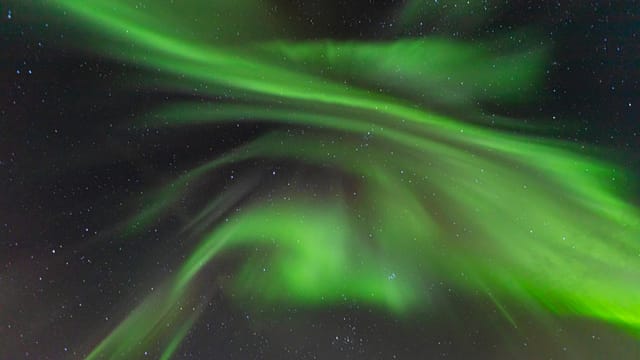
NOAA Issues Alert After X‑Class Solar Flare; Minor Geomagnetic Storms Expected
NOAA warned that an X4.2 solar flare on Feb. 4 produced a G1 (minor) geomagnetic storm on Feb. 5, with further G1 activity possible on Feb. 6 and 8. Impacts are expected to be modest — chiefly HF radio interference, potential satellite anomalies and high‑latitude auroras — but the episode underscores growing space‑weather risks as active solar regions face Earth.
Laser Pulses Flip Magnet Polarity, Opening Path to Tunable Optoelectronics
Swiss researchers reported in Nature that laser pulses can reverse the polarity of a specialised ferromagnet, demonstrating all‑optical control beyond ferrimagnetic materials. The finding points to faster, potentially lower‑energy ways to program magnetic states, with implications for memory, spintronics and reconfigurable optoelectronic circuits, though engineering challenges remain.
UCLA Physicists Find Direct Evidence of a ‘Liquid’ Charge Density Wave in a Classic Quantum Material
UCLA researchers report direct experimental evidence for a liquid-like charge density wave in 1T-TaS2, a result published in Nature Physics that appears to resolve a 30-year theoretical dispute. The observation expands the known landscape of electronic order in correlated materials and has potential implications for understanding and controlling emergent phenomena such as unconventional superconductivity.
Dubai Hosts Global Brain Trust: Top Scientists Gather to Rethink Basic Science, AI and Global Collaboration
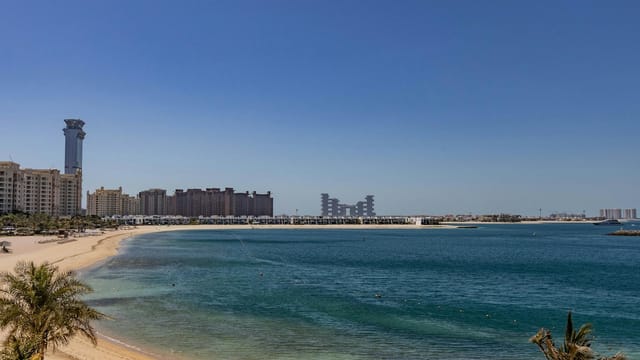
A three-day summit in Dubai brought together 71 of the world’s leading scientists, including dozens of laureates, to debate the future of basic science, AI’s role in discovery, open-science cooperation and new models for international research collaboration. The event’s location and its integration with the World Government Summit highlight the growing linkage between elite science, state strategy and international diplomacy.

China to Send Second 'Xihe' Solar Observatory to Sun‑Earth L5 for Earlier Space‑Weather Warnings
China plans to launch a second solar observatory, Xihe‑2, to the Sun‑Earth L5 point in 2028–2029 to deliver stereoscopic and multi‑band observations of the Sun. The mission aims to improve early warning of solar storms, bolster China’s heliophysics capabilities and strengthen operational space‑weather forecasting.
NASA Pauses First Crewed Artemis Moon Flyby After Cold Weather Cancels Fueling Test
NASA postponed the Artemis II crewed lunar flyby after near-freezing temperatures at the launch site forced cancellation of a key rocket fueling test. The launch is now scheduled no earlier than February 8, with the potential for further delays that could move the mission into March, highlighting weather vulnerability and scheduling fragility in complex human spaceflight programmes.

US Crewed Lunar Flyby Postponed as Severe Cold Grounds Launch Plans
A US crewed lunar flyby mission was postponed after an extreme cold spell compromised launch-commit criteria for cryogenic propellants and ground systems. The delay highlights technical vulnerabilities to severe weather, risks cascading schedule impacts across lunar programme milestones, and carries political and commercial consequences for U.S. space leadership.