
Technology News
Latest technology news and updates
Total: 510

Alibaba Debuts Qwen3‑Max‑Thinking, a Tool‑Enabled Inference Model Aiming to Rival GPT‑5.2
Alibaba has launched Qwen3‑Max‑Thinking, an inference model that combines adaptive tool calling and test‑time scaling to improve reasoning, factual accuracy and alignment. Alibaba claims benchmark parity with leading models such as GPT‑5.2‑Thinking, and has deployed the capability in Qwen Chat, signalling rapid commercialisation within its cloud and consumer ecosystem.

Alibaba Unveils Qwen3‑Max‑Thinking, a Trillion‑Parameter Inference Model Aimed at Beating Western Rivals
Alibaba has released Qwen3‑Max‑Thinking, a trillion‑parameter inference model it says surpasses leading Western models on multiple benchmarks, with stronger agent tool‑calling and reduced hallucinations. The company is opening trials on PC and web, positioning the model for broad commercial use while leaving independent verification of its claims outstanding.
Pony Ma Bets on Another Red‑Envelope Blitz to Jump‑Start Tencent’s AI App
Tencent will give away 10 billion yuan in Spring Festival red envelopes via its new AI app Yuanbao, aiming to reproduce the viral growth that WeChat achieved in 2015. The campaign underscores Tencent’s strategy of using cultural moments and heavy subsidies to drive rapid user adoption of new services, even as it faces competitive and regulatory pressures.

China’s Zhijiang Lab Plans 100-Satellite ‘Three‑Body’ AI Constellation by 2027, Pushing Models Into Orbit
Zhijiang Laboratory has announced plans to field a 100‑satellite ‘Three‑Body Computing Constellation’ by 2027, with 39 satellites in development and 10 AI‑capable units due in 2026. The constellation will run a domestic foundation model on‑orbit to enable satellite autonomy, rapid calibration and multimodal data fusion, signalling China’s push to embed AI in space systems.
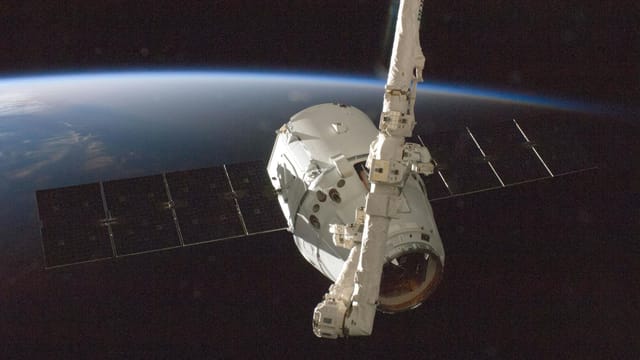
China’s Guoxing Unveils Ambitious Orbiting AI Supercluster — 2,800 Satellites to Power ‘Silicon‑Based Agents’
Guoxing Aerospace has revealed plans for a 2,800‑satellite space compute network aimed at serving autonomous ‘silicon‑based’ agents and large AI models, with initial nodes already launched. The programme promises low‑latency global compute via laser‑linked low Earth orbits but faces substantial technical, economic and geopolitical hurdles before it can scale.

Ant’s AI Push Enters Life Insurance: Partnership with Tongfang Global Life to Rework Underwriting and Claims
Ant Data Technology and Tongfang Global Life have signed an agreement to deploy AI across life-insurance operations, combining Ant’s modelling and platform tools with Tongfang’s regulatory licence and balance sheet. The deal highlights both opportunities for faster, cheaper insurance services and the regulatory and consumer-protection challenges of algorithmic underwriting in China.

Pony Ma Rolls Out RMB1bn ‘Red Packets’ for Yuanbao as Tencent Pushes AI Social Play
Tencent is deploying a RMB1 billion Lunar New Year red‑packet campaign to drive users to Yuanbao, an AI‑focused social app, while accelerating internal AI reorganisations and hiring. The company hopes the promotion and a new feature called Yuanbao Pai will reproduce the viral network effects of WeChat’s early red‑packet phenomenon and bind content, communications and generative AI.
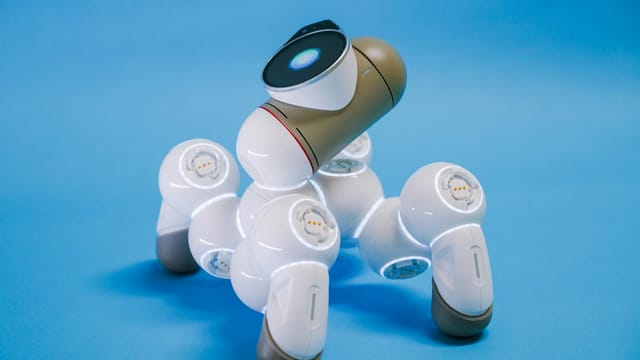
China Demonstrates First Direct Link Between Humanoid Robot and High‑Throughput LEO Satellite, Pushing Robot Mobility Beyond Terrestrial Networks
Beijing researchers have successfully linked a humanoid robot directly to a GalaxySpace LEO phased‑array internet satellite, streaming visual data without ground‑based infrastructure. The test demonstrates a practical path for robots to operate with resilient, wide‑area connectivity and underscores China’s advances in commercial LEO broadband technology.
China Tests First Direct Link Between a Humanoid Robot and a LEO Internet Satellite, Paving Way for Net-Independent Field Autonomy
Chinese researchers report the first successful direct link between a humanoid robot and a low‑Earth‑orbit internet satellite, streaming robot vision data without ground network support. The test combines embodied robotics with phased‑array flat‑panel satellite technology, enabling potential autonomous operations in remote or infrastructure‑sparse areas while raising verification, security and dual‑use concerns.

China’s StepFun Taps Qianli Chief and Raises >RMB5bn to Push Foundation Models into Devices
StepFun has appointed Qianli Technology chairman Yin Qi as its own chairman and closed a B+ round exceeding RMB 5 billion to accelerate development of foundation models and commercialise AI on devices. The funding and leadership change underscore a strategic push in China to embed large models into cars, smartphones, wearables and robots through close hardware partnerships.

China Loses a Leading Chip Investor: Zhu Xudong, Architect of State‑Backed Semiconductor Deals, Dies Aged 62
Zhu Xudong, a veteran Chinese semiconductor investor and former Pudong science bureau chief who led state‑backed deals to build domestic chip capability, died suddenly at 62 while on a business trip. His passing leaves a practical leadership gap at a major investment vehicle and removes a seasoned architect of China’s strategy to translate state capital into industrial capacity in semiconductors.

China’s Robot Start‑Ups Take Center Stage: Two Embodied‑AI Firms Land Spots on the Spring Festival Gala
Two Chinese embodied‑AI start‑ups, Galbot and Magic Atom, have been chosen for prominent roles on the 2026 Spring Festival Gala, signalling a shift from technical demonstration to mass visibility. Galbot has secured large industrial orders and more than $300 million in financing, while Magic Atom — spun out of a Xiaomi‑linked robotics team — has shown rapid product development and fundraising momentum.