
# SpaceX
Latest news and articles about SpaceX
Total: 48 articles found

Musk’s New Bet: SpaceX Reorients Toward a Moon City — Ambitious Timeline, Big Questions
Elon Musk says SpaceX is prioritizing construction of a "self-expanding" lunar city, claiming it could be feasible within ten years because of faster launch cadence and shorter transit times to the Moon versus Mars. The announcement reflects a strategic shift toward nearer-term lunar activity, but meeting such a timetable would require major technical, regulatory and commercial breakthroughs.

Musk and Washington Push a New Lunar Sprint — But the Moon’s Practicalities and Politics Remain Fraught
Elon Musk’s public call to "return to the Moon" and SpaceX hiring for AI satellite and space data-centre work have dovetailed with U.S. government plans to accelerate lunar missions, industrial infrastructure and even nuclear deployments. The combination of private ambition and an assertive U.S. policy raises technical, economic and geopolitical questions about feasibility, cost and the militarisation of cislunar space.
SpaceX Reportedly Puts Mars on Hold to Prioritise an Unmanned Moon Landing
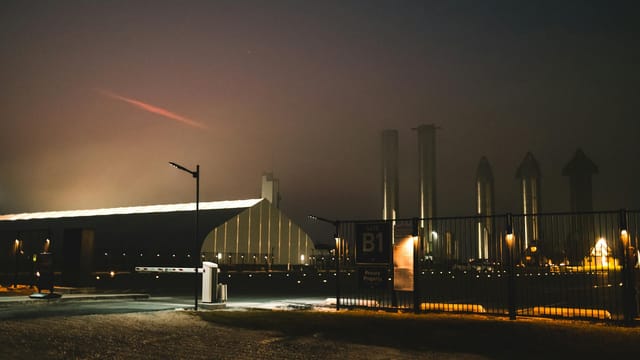
Cailian reports that SpaceX has told investors it will delay an in‑year Mars launch and concentrate on an uncrewed lunar landing targeted for March 2027. The shift responds to technical priorities, regulatory nudges from Washington and the company’s broader commercial and fundraising context, while leaving long‑term plans for Mars intact but deferred.

SpaceX Pivots from Mars to Moon, Aiming for Uncrewed Lunar Landing in March 2027
SpaceX has delayed a Mars mission slated for 2026 and told investors it will prioritise lunar operations tied to NASA, aiming for an uncrewed Moon landing in March 2027. The move recalibrates timelines, concentrates resources on an attainable near‑term goal and has implications for investors, U.S. space policy and international competition in cislunar space.
Musk Warns of an AI Power Crunch — and Suggests Moving GPU Farms to Space
Elon Musk warned that skyrocketing GPU production could outpace electricity supply, potentially leaving large AI clusters unable to power up. He suggested that space-based data centres might become economically attractive if terrestrial power capacity fails to keep pace, a claim that highlights broader tensions between AI compute demand and grid capabilities.
Musk’s Three‑Hour Blueprint: Space Data‑centres, Robot Factories and a Stark Warning on China’s Manufacturing Lead
In a three‑hour interview Elon Musk argued that the next phase of AI will be decided by where compute is powered and who makes the machines. He envisions orbital solar‑powered data centres and humanoid robots that can build more robots as the key levers, while warning that China’s manufacturing depth and rising power output present a structural challenge to the United States.

From Chatbots to Rockets: How Eight Private Giants Are Rewriting the Rules of Global Tech Infrastructure
A small set of private companies now commands valuations normally associated with public tech giants, and their worth derives less from single products than from durable infrastructure — compute and model stacks, satellite and launch networks, payment rails, logistics and urban transport systems. The recent SpaceX–xAI deal and Waymo’s funding round illustrate a market reappraising which startups are foundational, reshaping commercial competition and regulatory priorities globally.

Musk Says Space Will Be the Cheapest Place to Run AI Within Three Years — Here’s Why That Would Upend the Cloud
Elon Musk told a podcast that within 30–36 months running large AI clusters in space will be far cheaper than on Earth, arguing terrestrial power constraints, grid bottlenecks and supply‑chain limits make orbital solar arrays economically superior. He cited higher energy yield from space solar, lower need for batteries, and simpler approvals versus terrestrial PV, while acknowledging engineering and regulatory hurdles remain.
SpaceX Eyes a Starlink Phone — A Bid to Plug Direct Satellite Connectivity into the Trillion‑Dollar Mobile Market
SpaceX is preparing to develop a mobile device that can connect directly to its Starlink satellites, leveraging Starship launches, spectrum purchases and recent trademark and patent filings. If realised, a Starlink phone would expand SpaceX’s market reach, challenge traditional carriers, and tie into broader ambitions for space‑based data centres and orbital services.
Musk’s SpaceX–xAI Tie-Up Pushes His Net Worth Past the $800bn Mark — and Raises Strategic Stakes
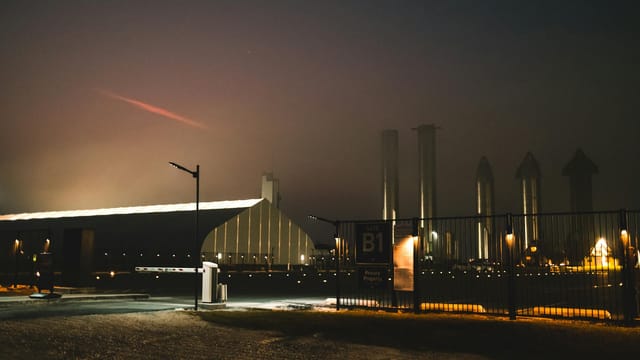
Elon Musk’s SpaceX and xAI have merged in a deal that Forbes estimates added roughly $84 billion to his net worth, pushing him past the $800 billion threshold to a record level around $852 billion. The combined company is being valued privately at about $1.25 trillion, with Musk holding an estimated 43% stake, and is preparing for an eventual IPO and index inclusion that could unlock significant liquidity.

Musk’s Space Data‑Centre Ambition Meets AWS’s Reality Check
Elon Musk and other tech leaders have promoted the idea of orbital data centres to solve terrestrial limits on AI compute. AWS chief Matt Garman and other experts argue the concept remains economically and technically impractical today, citing launch cadence, radiation, thermal management and maintenance challenges. The gap between headline visions and engineering reality suggests continued experimentation but little prospect of mass migration of hyperscale AI into orbit in the near term.
China’s Defence Stocks Spike as ‘Space Compute’ Dream and Homegrown Wide‑body Jet Gain Momentum
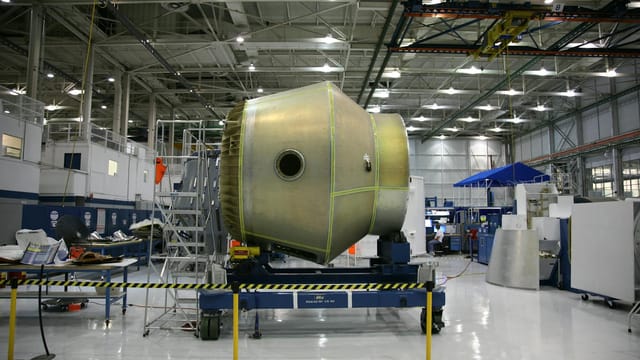
A surge in Chinese defence and aerospace stocks reflects investor excitement about SpaceX’s merger with xAI and a renewed push on China’s large civilian aircraft programmes. The merger reframes commercial space as a potential trillion‑dollar market for space‑grade power, laser communications and thermal systems, while COMAC’s accelerated C929 testing signals upward movement in China’s civil aerospace supply chain.