
# Tencent
Latest news and articles about Tencent
Total: 52 articles found

AI Red‑Packet War Sends Hong Kong Tech Stocks Tumbling, Tencent Shares Slide Nearly 5%
China’s internet giants have deployed more than RMB4 billion in AI‑themed red‑packet campaigns ahead of Lunar New Year, prompting a sell‑off in Hong Kong technology stocks. Tencent fell nearly 5% as investors weighed rapid user‑acquisition tactics against margin pressure and uncertain monetisation timelines.
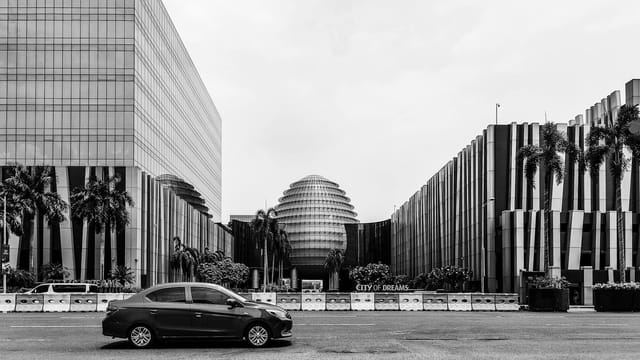
Shanghai Bets on AI: Tencent Executive Says the City Has ‘All‑Round’ Advantages for an AI Boom
Tencent vice‑president and Shanghai political adviser Li Qiang says the city has comprehensive advantages in AI — spanning chips, compute, data and talent — and is a welcoming place for AI startups and professionals. Shanghai’s mix of universities, capital markets and corporate R&D positions it to translate research into commercial AI products, even as chip supply constraints and regulatory issues temper prospects.
China’s Big Three Place a Trillion-RMB Bet on AI — Different Paths, Same High Stakes
China’s leading internet groups are spending hundreds of billions of yuan on AI, each following a different industrial logic: Alibaba is doubling down on cloud and commerce integration, Tencent is turning AI into immediate revenue uplifts inside WeChat and games, and ByteDance is attempting to seize the system‑level gateway on phones. The contest has moved from model architecture to ecosystem control, but talent, chips and capital patience are emerging chokepoints that will determine who converts investment into durable advantage.

Tencent Sprays RMB1bn in Red Packets to Force an AI Door — Can Yuanbao Repeat WeChat’s Coup?
Tencent’s Yuanbao launched a RMB1 billion red‑packet promotion that briefly flooded social networks and propelled the app to the top of China’s app charts. The campaign aims to replicate WeChat’s 2014 red‑packet playbook to seed Yuanbao as a mainstream AI assistant, but faces steeper challenges: lower natural frequency of AI usage, stronger competition, model quality concerns and the well‑documented difficulty of turning paid acquisition into long‑term retention.

Tencent Goes Back to Red Envelopes: ¥1bn AI‑fuelled Giveaway Floods WeChat Groups
Tencent launched a RMB 1 billion Yuanbao campaign on February 1 that uses shareable red envelopes and limited 10,000‑yuan reward cards to drive viral engagement on WeChat. The mechanics are designed to pull users back into existing social networks, accelerating distribution for Tencent’s new AI‑oriented app while raising questions about spam, abuse and regulatory attention.

Tencent Dumps ¥1bn in New-Year 'Red Envelopes' to Seed Yuanbao AI and Reboot Social Play
Tencent has launched a 1 billion yuan red‑envelope campaign to promote its Yuanbao AI assistant and new social features, aiming to recreate WeChat’s viral momentum. The stunt forms part of a broader New Year push by Chinese tech giants to capture AI users, with long‑term winners likely to be those with superior models and practical use cases rather than the biggest marketing budgets.

ByteDance's High-Risk Climb: Doubao as the Company's Bid to Own the AI-Assistant Summit
ByteDance has declared its 2026 priority: make the Doubao/Dola AI assistant the central interface that links its consumer apps and cloud services. The company has scaled user adoption rapidly, advanced its model capabilities and pushed into phone‑level automation, but now faces fierce competition from Alibaba and Tencent, regulatory scrutiny, and practical permission barriers from other app and device owners.
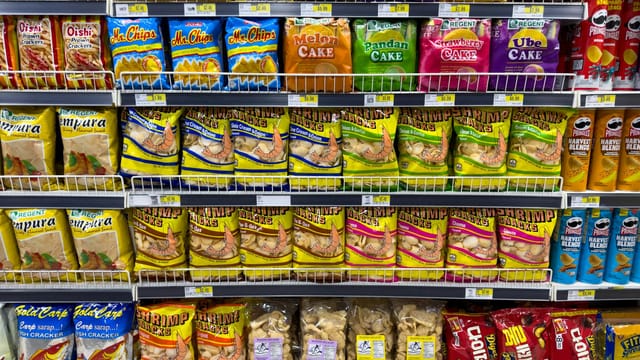
From 40 m² Shop to HK$86bn IPO: How Two '85ers Turned Cut‑Price Snacks into China's Biggest Retail Bet
Two entrepreneurs from modest backgrounds built MingMing Busy into China's largest snack retail chain by combining ultra‑low prices, direct sourcing and rapid expansion into lower‑tier markets. The group's HK IPO valued it at about HK$86.2bn, rewarding scale but leaving open questions about single‑store profitability, brand trust and the sustainability of its low‑margin model.

China’s Big Tech Escalates the AI Arms Race: ByteDance Vows to “Climb Peaks” as Alibaba and Tencent Counterpunch
ByteDance’s CEO Liang Rubo has set an ambitious 2026 agenda, prioritising the Dola assistant and global talent incentives to secure a leading position in AI model capability. Alibaba and Tencent are rapidly countering with chips, cloud integrations and consumer promotions, turning early 2026 into an industry‑wide scramble across applications, silicon and datacentres.

Pony Ma’s RMB1bn AI Counterattack: Tencent Bets ‘Yuanbao’ and Red‑Envelope Growth to Reclaim Social Ground
Tencent has launched a concentrated RMB1 billion push to embed AI into social products, notably upgrading its Yuanbao offering to group chat and using culturally resonant red‑envelope incentives to drive adoption. The plan leverages Tencent’s social graph and payments infrastructure but must navigate regulatory scrutiny and fierce competition from Chinese AI rivals.

Red Envelopes as Weapons: China’s Tech Giants Gamble Big to Buy AI Users This Lunar New Year
China’s tech giants are reviving Lunar New Year cash giveaways to accelerate AI app adoption: Tencent’s Yuanbao will distribute 1 billion yuan, Baidu’s Wenxin 500 million yuan, and ByteDance is showcasing its cloud under the Spring Gala. The tactics expose a strategic split—consumer subsidies to buy attention versus infrastructure plays to win enterprise customers—and highlight the fragility of changing user habits with cash alone.

China’s Kunlun Tiangong Aims to Build an ‘AI Spotify’ Abroad as Music Models Hit a 2026 Inflection Point
Kunlun Tiangong founder Zhou Yahui says the company’s Mureka V8 music model marks a 2026 inflection point for AI-composed music and plans to launch an overseas, Spotify-like AI music platform. The firm will avoid direct competition with China’s ByteDance and Tencent, collaborate domestically, and focus overseas on productising AI-generated music via creator tools, a consumer app and APIs. Zhou argues AI music and short-form AI dramas could be the first major categories disrupted by native AI platforms in the next 1–3 years.