
# manufacturing
Latest news and articles about manufacturing
Total: 13 articles found

Beijing Freezes Growth of Vape Manufacturing, Tightens Rules for Capacity, Outsourcing and Exports
China's tobacco regulator has prohibited new e‑cigarette plant investments and largely barred capacity expansion through relocations or technical upgrades, while imposing strict compliance, environmental and export rules. The policy aims to rein in unlicensed production, enforce product and environmental standards, and constrain overall industry output without halting technological upgrades that meet regulatory conditions.

Xiaomi’s Lei Jun Boasts a Robot-Run Car Factory and Rooftop Solar — A Sign of Tech Firms Industrializing Hardware
Lei Jun says Xiaomi’s car plant uses roughly 600–700 robots to achieve fully automated assembly and inspection, and runs on photovoltaic panels installed across its roof. The statements mark Xiaomi’s push to vertically integrate high-tech manufacturing and position itself as a serious contender in the electric vehicle sector, though practical limits and risks remain.

Xiaomi’s Robotics Team Unveils TacRefineNet — Millimetre-Scale Tactile Pose Refinement Without Vision
Xiaomi’s robotics team unveiled TacRefineNet, a tactile‑only pose refinement model that can reduce grasping errors to millimetre precision without cameras or 3D object models. Demonstrated in both simulation and real‑world tests on automotive parts, the open publication of technical details could accelerate industrial adoption—provided hardware durability and generalisation challenges are addressed.

Manufacturing Shake-up in Guangdong: Foshan Slips as Dongguan Surges
Foshan has recorded consecutive periods of GDP contraction, driven by an export slump and a deepening property downturn that hit its furniture and building‑materials industries. Dongguan, by contrast, is growing faster after a concerted pivot toward higher‑value electronics, advanced manufacturing and cultural IP, narrowing the two cities' GDP gap to its smallest level since 2006.

Hefei’s Industrial Surge and Shenzhen’s Sprint: China’s City GDP Race Heats Up
Hefei has overtaken Jinan in momentum by leaning into high-tech manufacturing and policy-backed investment, tying both cities at 1.42 trillion yuan in 2025. Shenzhen is the leading candidate to break the 4-trillion-yuan barrier in 2026, while Nanjing, Ningbo and Tianjin compete to reach the 2-trillion mark, each with different strengths and constraints.

Chongqing Offers Millions to Drive Industrial AI: Grants for Data, Vertical Models and ‘Intelligent Agents’
Chongqing has launched a targeted subsidy programme to accelerate AI adoption in manufacturing, offering up to RMB5 million per project with specific rewards for industrial datasets, trusted data spaces and vertical AI models. The measures align municipal incentives with Beijing's national push for industrial AI, prioritising domain-specific data and applications while raising governance and coordination questions.

Northern Revival: How Henan, Shandong and Hebei Engineered an Economic Breakout in 2025
In 2025 several northern Chinese provinces recorded notable economic gains as Shandong crossed the 10 trillion yuan threshold and Henan and Hebei posted strong growth driven by industrial upgrading, large projects and logistics. The rebound reflects policy‑led modernization of heavy industry, concentrated investment in strategic clusters and improving export and transport links, but innovation shortfalls and reliance on big projects pose questions about sustainability.

Guangdong Keeps China’s Economic Crown — but the Next Leap Will Be Harder
Guangdong maintained its position as China’s largest provincial economy in 2025, driven by strong foreign trade, rapid expansion of high‑tech manufacturing and sustained R&D investment. The province plans to target 4.5%–5% GDP growth in 2026 while pivoting into new sectors such as the low‑altitude economy, but faces headwinds from SME digitalisation gaps and modest fiscal revenue growth.
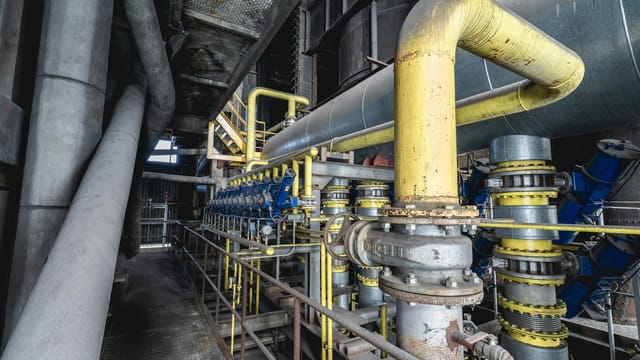
China's Industrial Profits Inch Up as Tech and Equipment Manufacturing Offset a Mining Slump
China's large industrial firms posted a small 0.6% profit increase in 2025, driven by strong gains in equipment and high‑technology manufacturing that offset a steep fall in mining. Revenue growth remained tepid and indicators such as rising receivables and inventories point to a fragile recovery that could be vulnerable to external demand shocks.

Guangdong Hits RMB14.58tn — China’s Economic Engine Consolidates Lead and Eyes California
Guangdong posted RMB14.58 trillion in GDP for 2025, holding the title of China’s largest provincial economy for the 37th year. The province couples deep manufacturing capacity with leading-edge innovation, aims to double its economy by 2035, and plays an outsized role in national fiscal transfers and global trade.

US Carmakers at Risk of Becoming Niche Players as Global Markets Shift
A University of Michigan professor warns that Ford and General Motors risk becoming niche producers focused on pickups and SUVs if they lose market share in Canada, Mexico and other markets. Such a retreat would have wide economic and strategic consequences, as global demand shifts toward smaller, electrified vehicles and non‑US competitors expand abroad.

China’s Investment Engine Stalls: Fixed‑Asset Spending Drops in 2025 as Services and Private Capital Retreat
China’s fixed‑asset investment fell 3.8% in 2025 to RMB 485,186 billion, driven by a steep decline in services spending and weak private and foreign investment. Targeted gains in energy and logistics projects offset broader weakness, leaving policy‑makers to balance short‑term stimulus with medium‑term fiscal risks.