
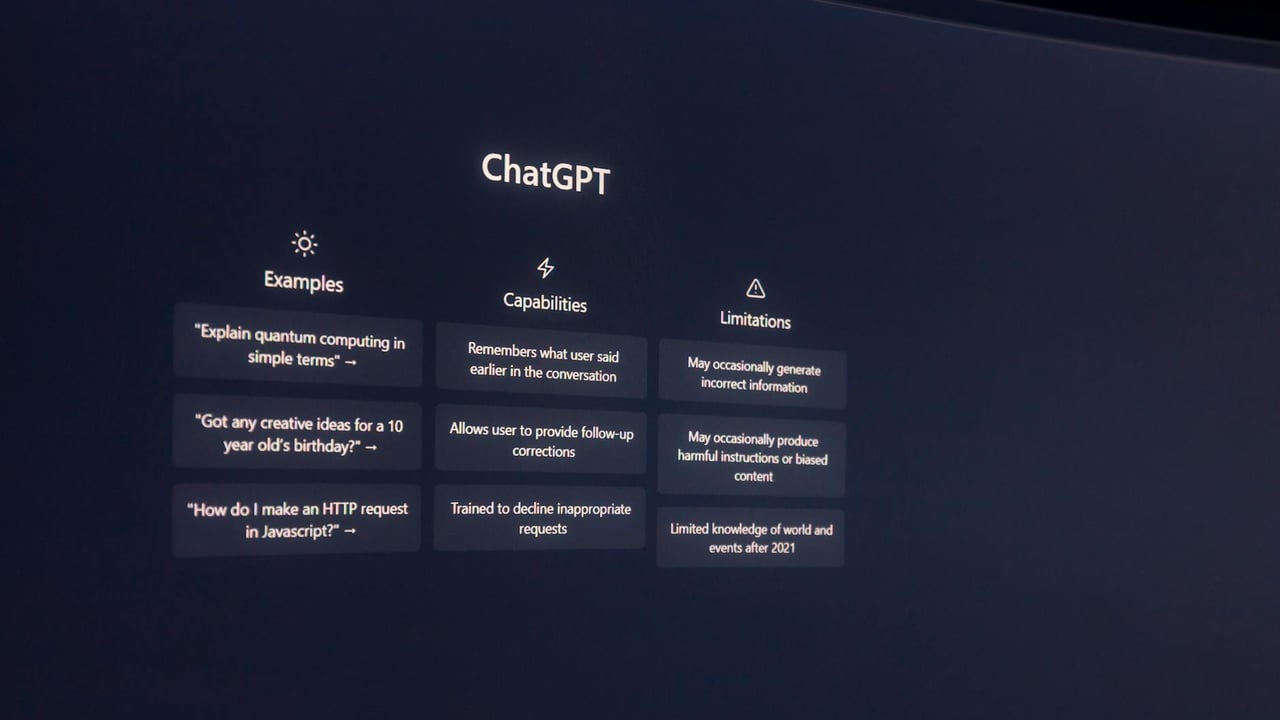

An Evercore ISI analyst has renewed attention on a question that has hovered over the generative‑AI era: can conversational interfaces capture a meaningful slice of the $500‑billion digital advertising market? Mark Mahaney projects that OpenAI could reach roughly $25 billion in annual ad revenue by 2030 if it successfully monetises ChatGPT with targeted, clearly labelled ads. The firm is already preparing limited tests of advertising for free and Go users in the United States, signalling a formal shift from a pure subscription model toward ad‑supported scale.
OpenAI’s recent growth helps explain the interest. The company’s CFO reported a steep revenue ramp from an approximate $2 billion run‑rate in 2023 to about $20 billion annualised in 2025, underscoring how rapidly AI‑driven products can scale. Yet the business remains loss‑making, and executives have framed advertising as a pragmatic lever to bolster top line and move toward profitability without saddling every user with subscription fees. OpenAI has published ad‑operation principles — including clear labelling of ads and a pledge not to share users’ conversation content with advertisers — in an effort to balance monetisation with trust.
The commercial case rests on two pillars: audience scale and intent. ChatGPT claims close to 1 billion weekly active users, and conversational exchanges often surface explicit purchase intent or problem statements that advertisers prize. That explicitness could make conversational ads both more relevant to users and more valuable to marketers, potentially commanding higher conversion rates than many display formats.
But the scale of the prize and the barriers to getting there are both large. Mahaney contrasts a potential $25 billion OpenAI business with Google’s dominant search and YouTube advertising, which together generated near $300 billion in 2025, and Meta’s roughly $180 billion. Those incumbents also enjoy robust margins — operating profits in the neighbourhood of 40% for core ad businesses — and years of habit, auction mechanics and advertiser trust that OpenAI must contend with.
How ads appear matters. OpenAI plans to display ads at the bottom of answers, tied to the current conversation, rather than injecting intrusive banners. Analysts suggest a novel ‘‘conversational’’ ad format — where users can discuss and refine purchase intent within the chat — could prompt some advertisers to reallocate budgets. For ad buyers, the attraction is clarity of intent and the possibility of higher conversion; for users, the risk is degradation of the assistant experience and new privacy trade‑offs.
Regulatory, ethical and product obstacles loom. Even if OpenAI avoids sharing raw conversation data with advertisers, targeting derived from conversational context raises fresh privacy questions that regulators and civil society will scrutinise. Advertisers may also demand reporting and measurement systems that are interoperable with their existing platforms, requiring OpenAI to build robust, transparent ad infrastructure quickly.
Strategically, a $25 billion ad business would not displace Google, but it would change the economics of digital advertising and the way marketers think about AI interfaces. It could also accelerate product competition: Google is already retooling its own models and monetisation plans to defend search’s ad franchise. For the broader internet economy, a credible AI‑assistant ad channel would diversify revenue streams away from search and social feeds, forcing incumbents to respond on product, pricing and policy fronts.
For now, the path is plausible but far from certain. OpenAI has the scale and brand to attract advertisers, and a conversation format promises higher intent signalling than some legacy formats. Yet turning that into a durable, profitable business will require careful product design, advertiser adoption, and navigation of regulatory scrutiny — and it will have to happen against the gravity of Google’s entrenched search ecosystem.