
Technology News
Latest technology news and updates
Total: 510

Shanghai Lawmaker Calls for Citywide AI Governance — From Mandatory Watermarks to a Content‑Safety Detection Hub
A Shanghai deputy and securities technologist, Zhan Tingting, has called for a Shanghai‑specific, citywide AI governance system combining a municipal content‑safety detection centre, mandatory non‑removable digital watermarks for AIGC, new local AI laws including protections for minors, and shared tools to detect AI‑enabled financial manipulation. The proposals aim to balance rapid AI adoption with data security, market integrity and public resilience.

Panel Prices Turn Mixed: TV Panels Poised to Rise as Laptop Screens Come Under Pressure
TrendForce expects February 2026 TV panel prices to rise across most sizes, while laptop panels are likely to see price declines due to weak PC demand. The divergence stems from inventory and capacity shifts as panel makers prioritise large-screen TV production and face structural changes in the wider display market.
WeChat Blocks Alibaba’s Qianwen New‑Year Giveaway — Platform Power Meets Growth Hacking
WeChat quickly blocked sharing links for Alibaba’s Qianwen app after the latter launched a large Spring Festival referral promotion, following a recent similar ban on Yuanbao red‑envelope links. The move underscores how dominant platforms police virality to protect user experience and manage competitive optics, forcing marketers to rethink referral‑based growth.

XPeng Begins Open‑Road Trials of L4‑Capable GX SUV, Packing 3,000 TOPS of Onboard Compute
XPeng has started open‑road validation of its GX six‑seat SUV equipped with four Turing chips and roughly 3,000 TOPS of onboard compute, marking a step toward Level‑4 autonomy. The tests in Guangzhou are technical verification rather than an indication of immediate commercial availability, and significant regulatory and safety hurdles remain.

Musk Says Space Will Be the Cheapest Place to Run AI Within Three Years — Here’s Why That Would Upend the Cloud
Elon Musk told a podcast that within 30–36 months running large AI clusters in space will be far cheaper than on Earth, arguing terrestrial power constraints, grid bottlenecks and supply‑chain limits make orbital solar arrays economically superior. He cited higher energy yield from space solar, lower need for batteries, and simpler approvals versus terrestrial PV, while acknowledging engineering and regulatory hurdles remain.
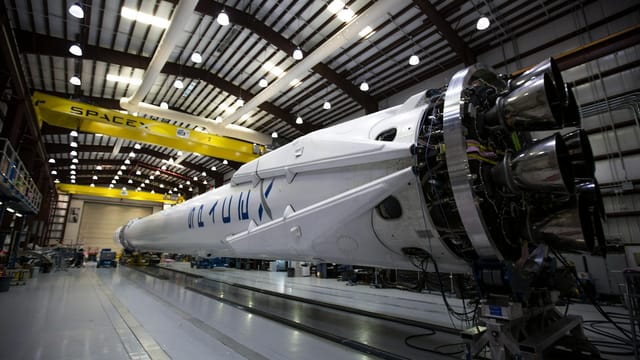
SpaceX Eyes a Starlink Phone — A Bid to Plug Direct Satellite Connectivity into the Trillion‑Dollar Mobile Market
SpaceX is preparing to develop a mobile device that can connect directly to its Starlink satellites, leveraging Starship launches, spectrum purchases and recent trademark and patent filings. If realised, a Starlink phone would expand SpaceX’s market reach, challenge traditional carriers, and tie into broader ambitions for space‑based data centres and orbital services.

Guangdong Pledges Targeted 2026 Build‑out: 21,000 5G Sites and 26,000 10G PON Ports to Prime AI and Industry Upgrade
Guangdong province has committed to adding 21,000 5G base stations and 26,000 10G PON ports in 2026 as part of a broader push to align digital infrastructure expansion with AI, industrial upgrading and platform‑economy growth. The targets form one element of a ten‑point provincial agenda that couples rapid build‑out with enhanced governance, risk controls and party integration at the start of China’s new five‑year planning cycle.
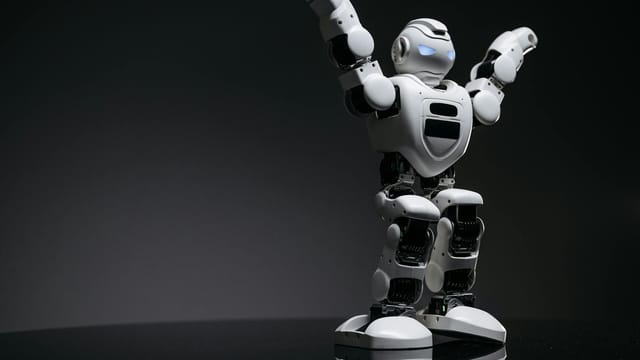
Mobileye Maps a Path from Car Chips to Commercial Humanoids — Mass Production Targeted for 2028
Mobileye has outlined plans to expand from automotive autonomy into humanoid robots after acquiring Mentee Robotics, with on‑site validation in 2026, production partnerships in 2027 and scaled deployment starting in 2028. The company sees robotics and driving automation as complementary components of a broader "physical‑AI" strategy that leverages simulation, perception and long‑tail generalization techniques.

Li Auto Recasts the Car as a Robot with New L9 — A Decade in the Making
Li Xiang announced that Li Auto’s next-generation L9 will be marketed as an ‘‘embodied-intelligence’’ robot, turning the vehicle into an active, personalised partner. The claim signals a strategic move from product to platform but will require heavy investment in sensors, compute, software and regulatory compliance to be realised.

Google Doubles Down on AI Compute: $175–185bn CapEx, Gemini Adoption, and a Cloud Surge
Alphabet reported strong 2025 results and announced a dramatic increase in 2026 capital expenditure — $175–185 billion — to scale AI compute and data‑centre capacity. Gemini 3 adoption, a 48% jump in cloud revenue, and falling model service costs underpin management’s argument that the spending is necessary to meet surging AI demand.

Google’s AI Bet: Gemini Hits 750m Users as Alphabet Pledges Up to $185bn in Capex
Alphabet beat earnings expectations but stunned markets by guiding $175–185bn of capital expenditure for the year, roughly double 2025’s outlay. Google Cloud’s 48% revenue growth and Gemini’s rapid user adoption — helped by a new Siri partnership with Apple — underpin the company’s aggressive push for AI infrastructure, even as investors fret about near‑term returns.

Pichai: Google’s Gemini Is a Force Multiplier for SaaS, Not Its Death Knell
On Alphabet’s earnings call Sundar Pichai said Gemini will empower SaaS companies by being embedded into workflows rather than replacing them. His comments highlight both an opportunity for software vendors to add AI-driven value and a strategic shift that increases dependence on major cloud and model providers.